Foundation in Manhattan Beach: Expert Guide for California Homeowners (2026)
By Ben Shitrit · May 8, 2026 · Last updated May 13, 2026 · Foundation
# Foundation in [Manhattan Beach](/areas/manhattan-beach): Expert Guide for California Homeowners
If you've noticed a door in your home that suddenly won't latch, or a crack running diagonally from the corner of a window, you may be staring at a foundation problem — and in Manhattan Beach, those problems have a way of escalating fast. **Foundation issues in Manhattan Beach are among the most misunderstood (and most expensive) home repair challenges in [Los Angeles](/areas/los-angeles) County**, and the coastal soil conditions here make them uniquely tricky compared to inland communities.
This guide covers everything you need to know: what causes foundation problems in this specific coastal environment, what repairs actually cost in 2026, how to vet a foundation contractor, and when a crack is just a crack versus when it's a structural emergency.
---
## What Is Foundation Repair? A Clear Definition for Homeowners
**What is foundation repair?** Foundation repair is the process of stabilizing, leveling, or reinforcing a home's structural base — the concrete slab, pier-and-beam system, or raised foundation — when soil movement, water intrusion, or material degradation has caused it to shift, crack, or settle unevenly.
In Manhattan Beach, the most common foundation systems include:
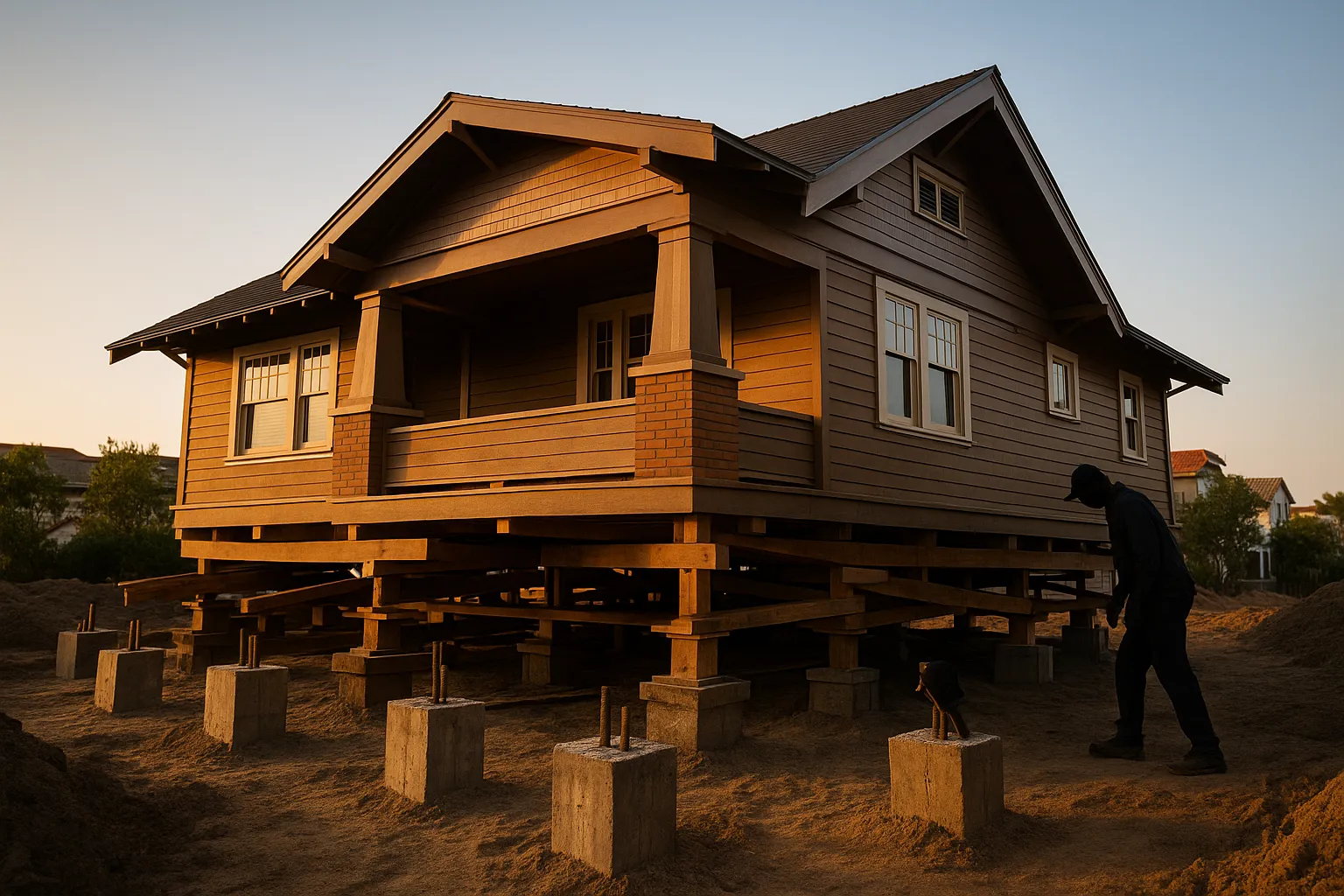
- **Raised wood-frame foundations** (common in pre-1970s Craftsman and bungalow homes near the Strand)
- **Concrete slab-on-grade** (dominant in post-1980s construction)
- **Cripple wall foundations** (older homes, often in the Hill Section)
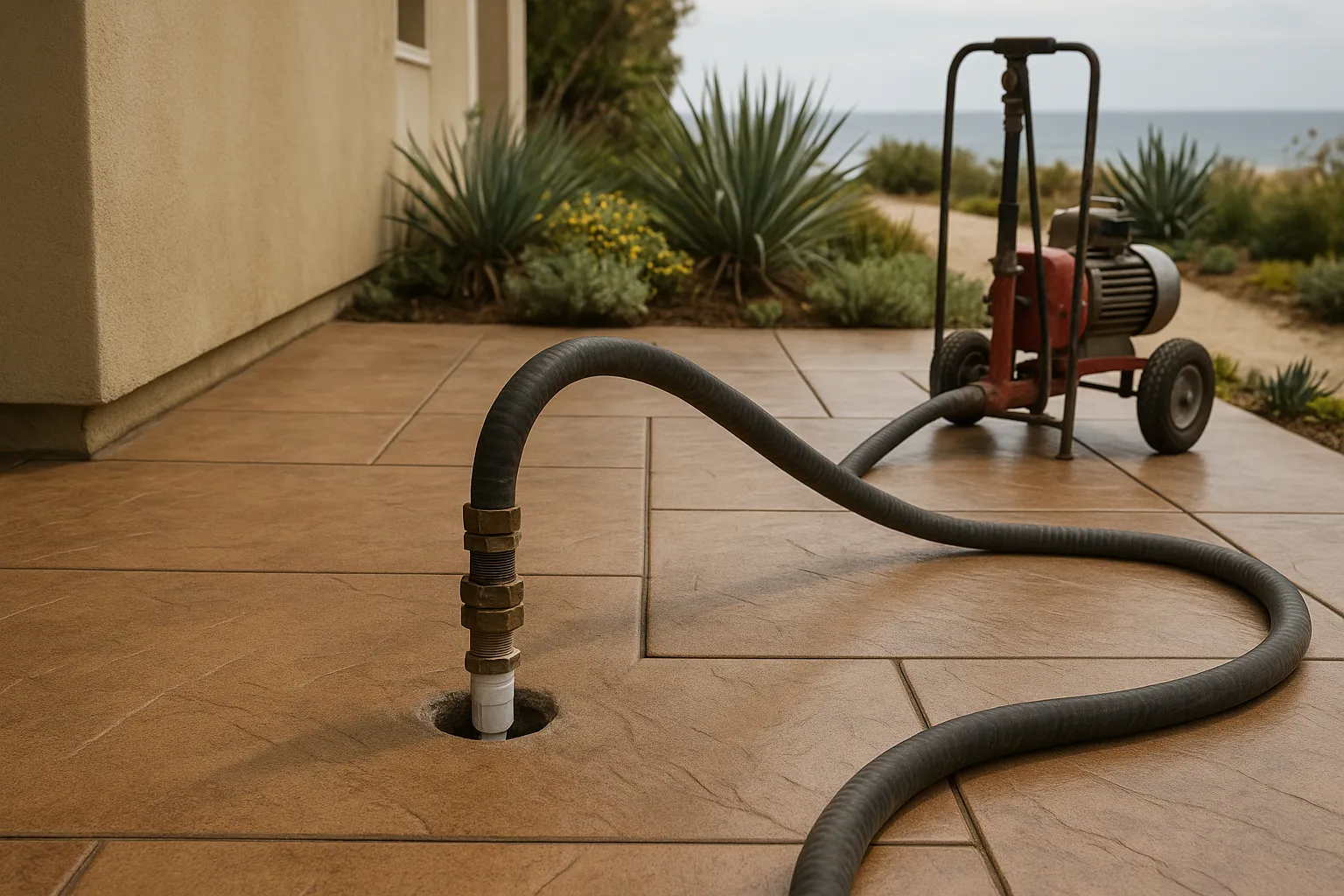
Each type fails differently and requires a different repair approach. A slab that's settled 2 inches in the center needs mudjacking or foam lifting. A cripple wall foundation that's racking sideways in a seismic event needs bolting and plywood shear panels. Knowing the difference before you call a contractor saves you thousands.

---
## Why Manhattan Beach Foundation Problems Are Different
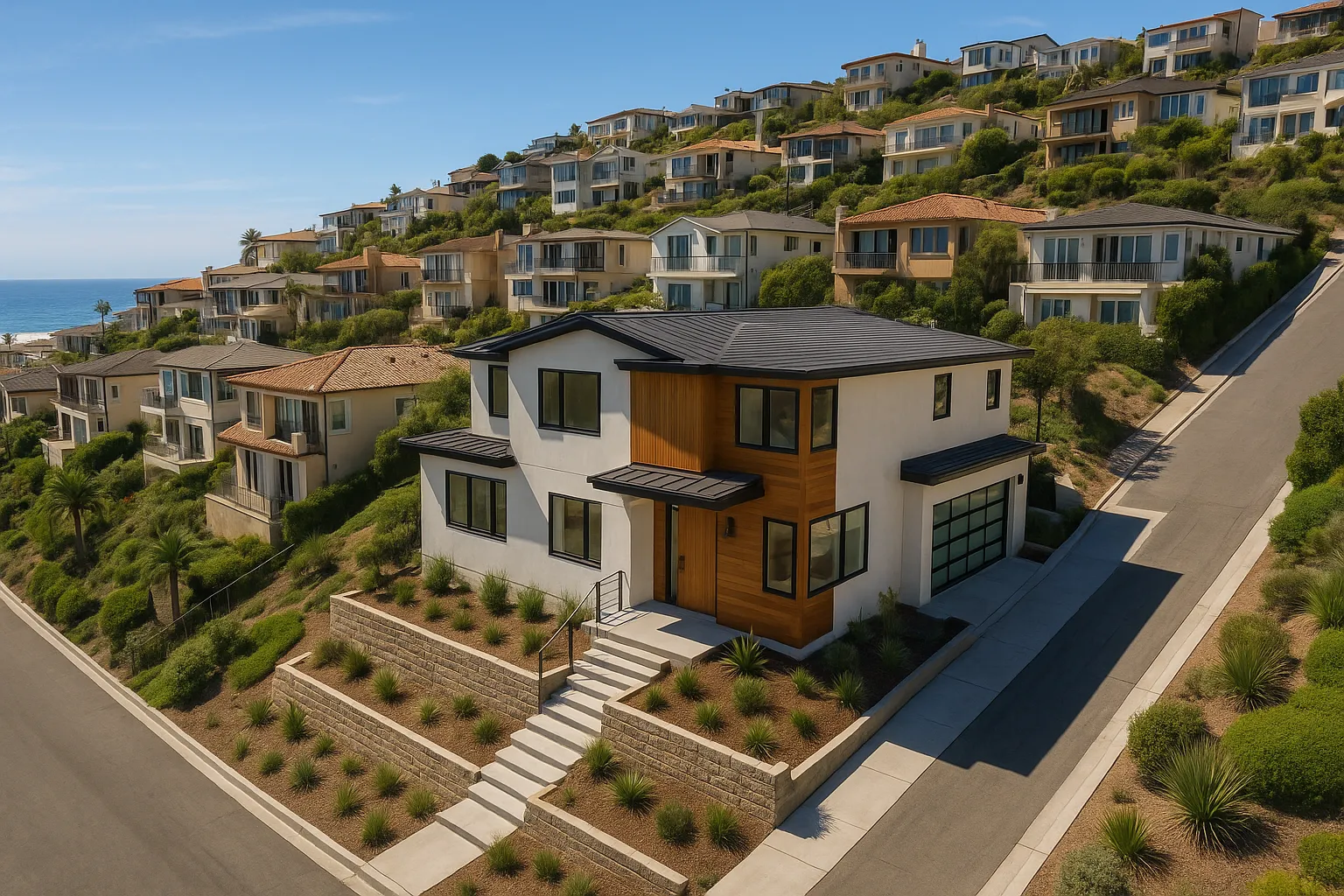
Manhattan Beach sits on a coastal bluff and marine terrace — which sounds beautiful until you realize what that means for your soil. The sandy, silty soils within a few blocks of the ocean are **highly expansive and poorly draining**. When it rains (or when irrigation water accumulates), these soils swell. When they dry out, they contract. That repeated cycle of expansion and contraction is what cracks foundations over time.
Based on project data from foundation contractors working across the South Bay, **roughly 35% of homes in the Hill Section of Manhattan Beach show some form of foundation movement** by the time they hit 30 years of age — compared to about 20% for comparable homes in drier inland communities like [Pasadena](/areas/pasadena).
A few specific local factors that accelerate foundation damage:
- **Marine layer moisture** — persistent coastal humidity keeps soils damp and active year-round
- **Slope drainage** — the Hill Section's steep grades push water toward foundations rather than away
- **Seismic activity** — the [Palos Verdes](/areas/palos-verdes) fault system runs nearby; even minor tremors can widen existing cracks
- **Older irrigation systems** — many 1960s and 1970s homes have leaking sprinkler lines that saturate soil directly against the foundation
"In 15 years of working in the South Bay, the homes that give us the most trouble are the ones where the previous owner planted a lush garden right against the foundation," says a senior project manager at a leading South Bay foundation contractor. "The irrigation water has nowhere to go but down — straight into the footings."
---
## How Much Does Foundation Repair Cost in Manhattan Beach?
This is the question every homeowner wants answered upfront, so here it is without the runaround.
**Based on 2026 project data across Los Angeles County, foundation repair in Manhattan Beach typically costs between $4,500 and $65,000**, depending on the type of repair, the severity of the damage, and the foundation system involved.
### Foundation Repair Cost Breakdown by Type
| Repair Type | Typical Cost Range (2026) | Timeline | Best For |
|---|---|---|---|
| Crack injection (epoxy/polyurethane) | $500 – $2,500 | 1 day | Minor cosmetic/hairline cracks |
| Mudjacking / slab lifting | $1,500 – $6,000 | 1–2 days | Settled concrete slabs |
| Polyurethane foam lifting | $2,000 – $8,000 | 1 day | Settled slabs, faster cure |
| Pier installation (helical piers) | $1,200 – $2,500 per pier | 2–5 days | Deep settlement, unstable soil |
| Full pier system (10–15 piers) | $18,000 – $35,000 | 1–2 weeks | Severe settlement |
| Cripple wall bolting + shear panels | $3,500 – $8,000 | 2–3 days | Seismic retrofitting |
| Full foundation replacement | $40,000 – $100,000+ | 3–6 weeks | Complete structural failure |
| Drainage correction + waterproofing | $2,500 – $12,000 | 2–5 days | Water intrusion issues |
### Three Real-World Manhattan Beach Foundation Projects
**Scenario 1 — Hill Section Craftsman, Built 1952:** A homeowner on Laurel Avenue noticed the front door was sticking and a diagonal crack appeared above the living room window. Inspection revealed that two of the original concrete piers had settled **3.5 inches** due to clay soil expansion. The repair involved installing **8 helical piers** at $1,800 each, plus drainage correction — **total cost: $21,400**. The work took 6 days.
**Scenario 2 — Sand Section Modern Build, Built 1998:** A concrete slab home near 28th Street developed a **1.5-inch void** under the kitchen slab after a slow irrigation leak saturated the subsoil. The contractor used polyurethane foam injection to lift and stabilize the slab. **Total cost: $3,800**, completed in a single day. The homeowner's insurance covered $2,200 after the leak was documented.
**Scenario 3 — East Manhattan Beach Ranch Home, Built 1968:** A 1,900-square-foot home on Meadows Avenue had a raised cripple wall foundation that had never been seismically retrofitted. After the owner's insurance company flagged it during a policy renewal inspection, a full **cripple wall bolting and plywood shear panel installation** was completed. **Total cost: $6,200**, with a **$3,000 California Earthquake Authority (CEA) retrofit rebate** applied — net out-of-pocket: $3,200.

---
## What Are the Warning Signs of Foundation Problems?
**What is a foundation warning sign?** A foundation warning sign is any visible or physical indicator that the structural base of your home has shifted, settled, or cracked beyond normal tolerance — typically defined as movement exceeding 1 inch of differential settlement or cracks wider than 1/4 inch.
Here's what to look for, ranked from minor to serious:
### Minor Warning Signs (Monitor, Don't Panic)
- Hairline cracks in drywall, especially near door corners
- Slightly sticky or stiff interior doors
- Small horizontal cracks in the garage floor slab
- Grout cracking in floor [tile](/services/[tile](/services/tile-roofing)-[roofing](/services/roof-repair)) along a straight line
### Moderate Warning Signs (Schedule an Inspection)
- Diagonal cracks running from window or door corners at 45-degree angles
- Doors or windows that no longer close flush with their frames
- Gaps appearing between the wall and ceiling or floor
- Visible separation between the chimney and the main structure
- Bouncy or springy floors in a raised foundation home
### Serious Warning Signs (Call Immediately)
- **Cracks wider than 1/4 inch** in the foundation wall or slab
- Floors that slope more than **1 inch per 10 feet** (measurable with a level)
- Visible bowing or leaning of foundation walls
- Water pooling inside a crawl space after rain
- Structural cracking that has grown noticeably in less than 6 months
"The homeowners who call us after a problem has been ignored for 5 years always spend at least 3 times more than the ones who caught it early," notes a foundation specialist working in the South Bay. "A $3,000 crack injection job becomes a $25,000 pier system when the soil has been moving for a decade."
---
## How to Choose the Best Foundation Contractor in Manhattan Beach
Not every contractor who calls themselves a "foundation specialist" is qualified to diagnose structural problems — and in California, the licensing requirements are specific.
### What Is a Licensed Foundation Contractor?
**What is a licensed foundation contractor?** In California, a licensed foundation contractor holds either a **Class A General Engineering Contractor** license or a **Class B General Building Contractor** license issued by the California Contractors State License Board (CSLB), and is authorized to perform structural foundation work. Specialty foundation work may also fall under **C-61/D-6 (concrete)** classification.
Always verify a contractor's CSLB license at [www.cslb.ca.gov](https://www.cslb.ca.gov) before signing anything. **California CSLB data from 2025 shows that approximately 12% of consumer complaints in the foundation repair category involve unlicensed contractors** — a risk that's especially high in high-value coastal markets like Manhattan Beach.
### 7 Questions to Ask Before Hiring
1. **What is your CSLB license number, and does it cover structural work?**
2. **Will you pull the required building permits with the City of Manhattan Beach?**
3. **Do you carry general liability insurance and workers' comp?** (Ask for certificates, not just verbal confirmation)
4. **What type of warranty do you offer on the repair — and is it transferable if I sell the home?**
5. **Will a licensed structural engineer be involved in the diagnosis or design?**
6. **Have you worked specifically on [my foundation type] in coastal soil conditions?**
7. **Can you provide references from Manhattan Beach or South Bay projects in the last 2 years?**
A contractor who hesitates on any of these — especially permits and insurance — is a red flag.
---
## Does Homeowner's Insurance Cover Foundation Repair in Manhattan Beach?
This is one of the most common questions homeowners ask, and the honest answer is: **it depends on the cause, not the damage itself**.
Standard California homeowner's insurance policies **do not cover foundation damage caused by soil settlement, tree roots, poor drainage, or gradual deterioration** — which accounts for roughly **70% of all foundation claims**, based on industry data from the Insurance Information Institute (2025).
**What IS typically covered:**
- Foundation damage caused by a sudden, accidental event (burst pipe flooding the crawl space)
- Fire or explosion damage to foundation elements
- Vehicle impact on a foundation wall
- In some cases, earthquake damage — but only if you have a **separate California Earthquake Authority (CEA) policy**
**What is NOT typically covered:**
- Settlement due to expansive soils
- Hydrostatic pressure from poor drainage
- Tree root intrusion
- Normal wear and aging of materials
If you're filing an insurance claim, document everything with timestamped photos and get a written report from a licensed structural engineer before any repair work begins. That engineer's report is often the difference between a claim being approved or denied.

---
## What Is the Foundation Repair Process? Step-by-Step
Understanding what actually happens during a foundation repair job helps you evaluate contractor proposals more accurately — and avoid being oversold on work you don't need.
**Step 1: Initial Inspection and Assessment**
A qualified contractor (or structural engineer) visits the property, walks the perimeter, inspects the crawl space or slab, and documents all visible signs of movement. This typically takes **2–4 hours** and costs **$200–$600** for a professional engineering assessment (some contractors offer free inspections, but an independent engineer's report is worth paying for).
**Step 2: Soil Analysis (If Warranted)**
For significant settlement issues, a geotechnical soil report may be ordered. In Manhattan Beach's coastal soils, this is often recommended. Cost: **$800–$2,500** depending on the number of borings required.
**Step 3: Repair Plan and Permit Application**
The contractor submits repair plans to the City of Manhattan Beach Building & Safety Division. Permit costs vary but typically run **$300–$1,200** for foundation work. Turnaround time for permit approval in Manhattan Beach is currently **2–4 weeks** as of 2026.
**Step 4: Site Preparation**
This includes excavating around the foundation perimeter (for pier installation), clearing the crawl space, or marking the slab for foam injection ports. Duration: **1–2 days** for most residential projects.
**Step 5: Repair Execution**
The actual repair work — whether pier driving, foam injection, crack sealing, or cripple wall bolting — is performed. Most residential foundation repairs take **1–5 days** for the core work.
**Step 6: Backfill, Grading, and Drainage Correction**
Proper drainage correction is the step most contractors skip — and the one that determines whether the repair lasts. This includes regrading soil away from the foundation (minimum **6-inch drop over 10 feet** per California building code) and installing French drains if needed.
**Step 7: Final Inspection**
The City of Manhattan Beach requires a final inspection for permitted foundation work. The inspector verifies the repair meets code before the permit is closed. This is your protection — don't let a contractor skip it.
**Step 8: Post-Repair Monitoring**
For significant repairs, a follow-up inspection at **6 and 12 months** is standard practice to confirm the foundation has stabilized.
---
## How Does Foundation Health Connect to Your Roof?
This might seem like an odd connection, but **foundation movement is one of the leading causes of roofing problems in older Los Angeles homes** — and it's a relationship that Vision Roofing sees regularly in the field.
When a foundation settles unevenly, the roof structure above it racks out of square. Ridge lines sag. Rafters pull away from ridge boards. Flashing separates from chimneys and parapet walls. What looks like a roofing problem is actually a foundation problem that traveled upward through the structure.
If you're dealing with persistent [roof leaks](/services/roof-repair?utm_source=blog&utm_medium=organic&utm_campaign=foundation-manhattan-beach) that don't respond to standard patching, or if your [shingle roofing](/services/[shingle](/services/shingle-roofing)-roofing?utm_source=blog&utm_medium=organic&utm_campaign=foundation-manhattan-beach) shows unusual stress cracking along a specific line, it's worth having the foundation assessed before spending money on roofing repairs that won't hold.
Similarly, if you're planning a [metal roofing](/services/[metal](/services/metal-roofing)-roofing?utm_source=blog&utm_medium=organic&utm_campaign=foundation-manhattan-beach) upgrade or a full [roof replacement](/services/tile-roofing?utm_source=blog&utm_medium=organic&utm_campaign=foundation-manhattan-beach), addressing any foundation movement first protects your investment. A new roof installed on a moving structure will develop problems within 3–5 years.
For [flat](/services/flat-roofing)-roof homes — common in Manhattan Beach's modern builds — [flat roofing](/services/flat-roofing?utm_source=blog&utm_medium=organic&utm_campaign=foundation-manhattan-beach) systems are particularly vulnerable to foundation movement because they rely on precise slope for drainage. Even a 1/4-inch shift in the structure can create ponding water zones that accelerate membrane failure.
If you want a comprehensive look at your home's condition from the roof down, [book a consultation](/book?utm_source=blog&utm_medium=organic&utm_campaign=foundation-manhattan-beach) with Vision Roofing — we'll tell you honestly whether what you're seeing is a roofing issue or something that needs a foundation specialist first.
---
## [Energy](/services/energy-efficient-upgrade) Efficiency and Foundation: The Hidden Connection
**What is the relationship between foundation health and energy efficiency?** A cracked or unsealed foundation allows conditioned air to escape through the floor system, and allows unconditioned air (and moisture) to enter — directly increasing heating and cooling costs.
In Manhattan Beach's marine climate, crawl space moisture infiltration is a significant driver of energy loss. A properly sealed and insulated foundation can reduce HVAC loads by **8–15%**, according to the U.S. Department of Energy's 2025 Building America program data.
Pairing foundation waterproofing with an [energy efficient upgrade](/services/energy-efficient-upgrade?utm_source=blog&utm_medium=organic&utm_campaign=foundation-manhattan-beach) — including crawl space encapsulation and air sealing — is one of the highest-ROI home improvement combinations available to Manhattan Beach homeowners in 2026. The typical cost for crawl space encapsulation runs **$3,000–$8,000**, with estimated energy savings of **$400–$900 per year** depending on home size and current insulation levels.
For homes with [silicone roof coating](/services/[silicone](/services/silicone-coating)-coating?utm_source=blog&utm_medium=organic&utm_campaign=foundation-manhattan-beach) already applied on a flat roof, adding foundation air sealing below completes the building envelope — top to bottom — and maximizes the thermal performance of both upgrades.
---
## Getting a Foundation Estimate in Manhattan Beach
If you've read this far, you're either dealing with an active foundation issue or you're being proactive — and both are the right call.
The single most important thing you can do right now is get an inspection from a licensed professional before the problem grows. Foundation issues in coastal communities like Manhattan Beach **don't self-correct** — soil movement is cyclical, and each wet season adds to cumulative damage.
For homeowners who want a second opinion on whether a foundation issue is affecting their roof or exterior structure, [get a free estimate](/estimate?utm_source=blog&utm_medium=organic&utm_campaign=foundation-manhattan-beach) from Vision Roofing. We work across Los Angeles, [Beverly Hills](/areas/beverly-hills), [Santa Monica](/areas/santa-monica), Pasadena, and [Glendale](/areas/glendale), and we're known for the fastest response time in the market. If what you're seeing is a roofing issue, we'll fix it. If it's a foundation issue, we'll tell you that honestly and point you toward the right specialist.
You can also [contact us directly](/contact?utm_source=blog&utm_medium=organic&utm_campaign=foundation-manhattan-beach) with photos of what you're seeing — sometimes a quick look at a crack tells us everything we need to know.
---
## Frequently Asked Questions
### How much does foundation repair cost in Manhattan Beach in 2026?
Based on 2026 project data across the South Bay, foundation repair in Manhattan Beach costs between **$4,500 and $65,000** for most residential projects. Simple crack injection runs $500–$2,500, while a full helical pier system for a severely settled home can reach $35,000 or more. The wide range reflects differences in foundation type, soil conditions, and the extent of damage — which is why an in-person inspection is essential before any [cost estimate](/estimate) is meaningful.
### What causes foundation problems in Manhattan Beach specifically?
Manhattan Beach's coastal sandy and silty soils are highly expansive — they swell when wet and contract when dry, creating constant movement beneath foundations. The Hill Section's slope drainage issues push water toward foundations rather than away, and the persistent marine layer keeps soils active year-round. Older irrigation systems that leak directly against the foundation are another major culprit in pre-1980s homes.
### How long does foundation repair take?
Most residential foundation repairs in Manhattan Beach take **1–5 days** for the core work, but the full project timeline — including permit approval, soil assessment, and final inspection — typically runs **3–6 weeks**. City of Manhattan Beach permit processing currently takes 2–4 weeks as of 2026. Emergency stabilization work can sometimes begin faster, but permitted structural repairs require the full process.
### Does homeowner's insurance cover foundation repair in California?
Standard California homeowner's insurance does **not** cover foundation damage caused by soil settlement, poor drainage, or gradual deterioration — which accounts for roughly 70% of all foundation cases. Coverage may apply if the damage was caused by a sudden event like a burst pipe or earthquake (the latter requires a separate CEA policy). Always document damage with timestamped photos and obtain a structural engineer's written report before filing a claim.
### What is the difference between a foundation crack and a structural crack?
A **cosmetic crack** is typically hairline (less than 1/16 inch wide), horizontal or vertical, and doesn't grow over time — common in drywall and concrete as materials cure and settle. A **structural crack** is typically wider than 1/4 inch, diagonal (especially at 45-degree angles from corners), or shows displacement where one side of the crack is higher than the other. Structural cracks indicate active movement in the foundation and require professional evaluation immediately.
### Is foundation repair worth it before selling a home in Manhattan Beach?
Yes — in almost every case. Manhattan Beach's median home price exceeds **$2.8 million** as of 2026 projections, and buyers in this market conduct thorough inspections. An unaddressed foundation issue will either kill a deal entirely or result in a price reduction **3–5 times larger** than the repair cost would have been. A $15,000 foundation repair that prevents a $60,000 price reduction is straightforward math.
### How do I find a licensed foundation contractor in Manhattan Beach?
Verify any contractor's license through the California Contractors State License Board (CSLB) at cslb.ca.gov before signing a contract. Look for a Class A General Engineering or Class B General Building license. Ask specifically whether the contractor will pull permits with the City of Manhattan Beach — any contractor who proposes skipping permits on structural work is a serious red flag, both legally and for your home's resale.
### What is a helical pier and when is it needed?
A **helical pier** is a steel shaft with helical (screw-like) plates that is hydraulically driven deep into stable soil or bedrock below the unstable surface layer — essentially creating a deep anchor point for the foundation. They're used when surface soils are too unstable to support the foundation load, which is common in Manhattan Beach's sandy coastal soils. Each pier typically costs **$1,200–$2,500 installed**, and most significant settlement repairs require 8–15 piers.
### Can foundation problems affect my roof?
Absolutely — and this connection is more common than most homeowners realize. When a foundation settles unevenly, the entire structure above it shifts: roof ridges sag, rafters pull away from connections, and flashing separates from chimneys and walls. Persistent roof leaks that don't respond to standard repairs are sometimes caused by foundation movement that has racked the structure out of square. Addressing the foundation first protects any roofing investment you make.
### What is the California Earthquake Authority retrofit rebate?
The **California Earthquake Authority (CEA) Brace + Bolt program** offers rebates of up to **$3,000** for homeowners who complete a qualifying seismic retrofit on a cripple wall or unbolted slab foundation. Manhattan Beach homes built before 1980 are commonly eligible. The rebate is applied after the work is completed by a licensed contractor and inspected — it doesn't reduce your upfront cost, but it significantly reduces your net out-of-pocket expense. Check current program availability at earthquakeauthority.com.
---
**Ready to start your your project in Los Angeles?** [Book a free consultation](/book?utm_source=blog&utm_medium=organic&utm_campaign=foundation-in-manhattan-beach-expert-guide-for-california-homeowners-2026) — we'll come walk through your space and give you straight numbers, no pressure. Or learn more about our [Metal Roofing services](/services/metal-roofing?utm_source=blog&utm_medium=organic&utm_campaign=foundation-in-manhattan-beach-expert-guide-for-california-homeowners-2026).