Foundation in San Marino: Expert Guide for California Homeowners (2026)
By Ben Shitrit · May 13, 2026 · Last updated May 13, 2026 · Foundation
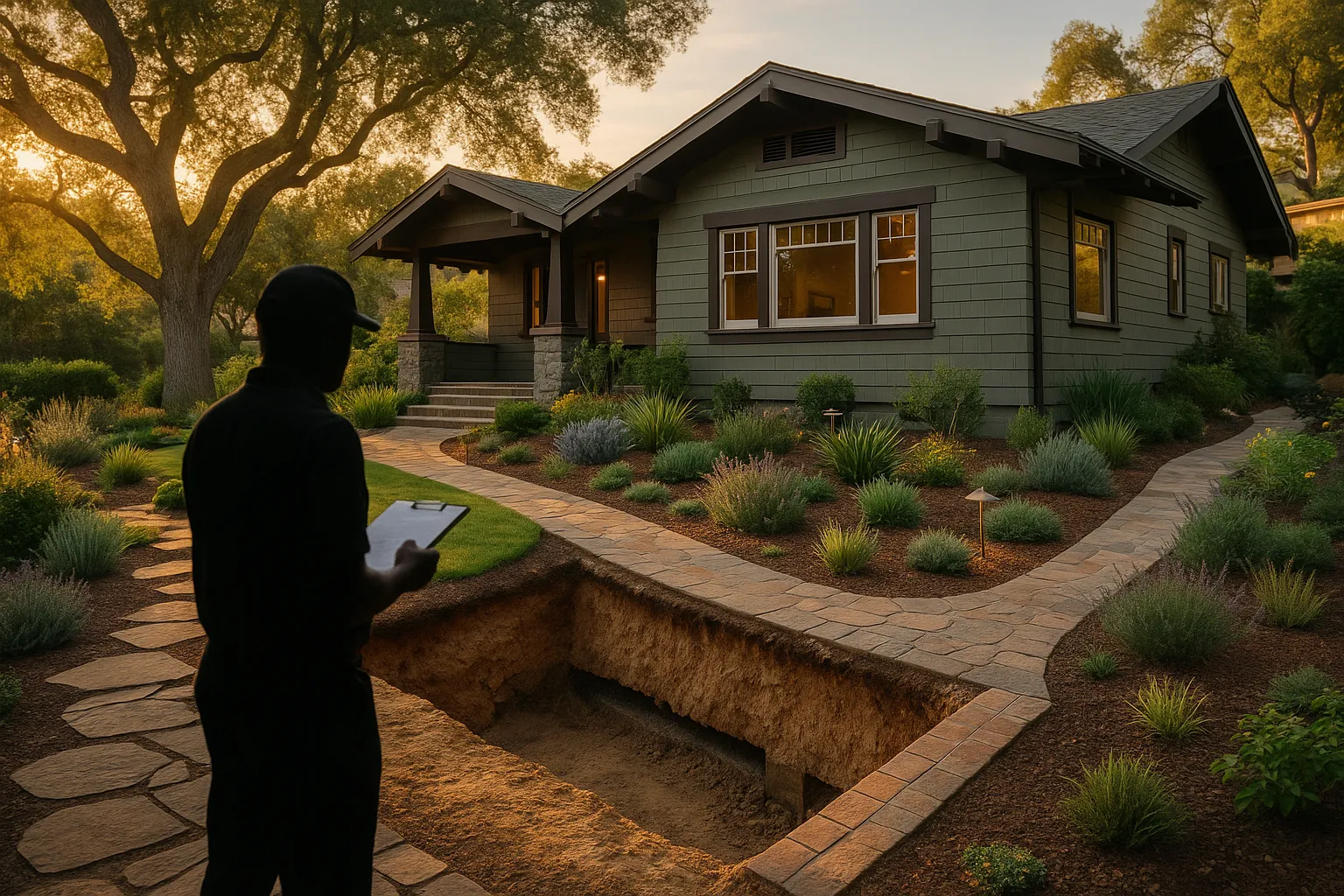
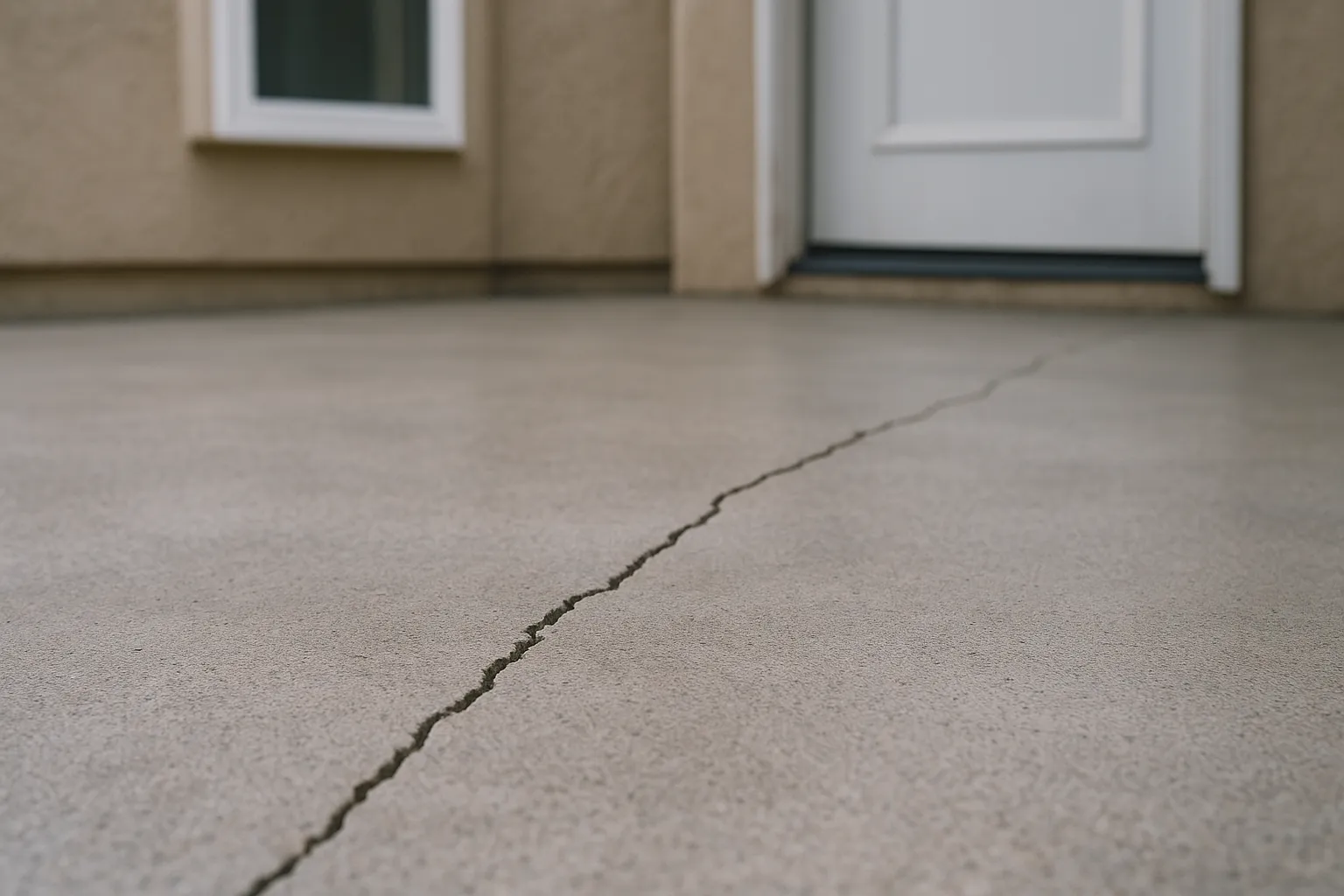
After inspecting hundreds of homes across the San Gabriel Valley, one thing becomes clear fast: **foundation problems in [San Marino](/areas/san-marino) don't announce themselves loudly**. They show up as a door that won't close right, a hairline crack above a window frame, or a floor that's developed a subtle slope you only notice when you spill something. If you're researching **foundation San Marino** issues, you're probably already seeing one of those signs — and you're right to take it seriously.
San Marino sits on expansive clay soils that swell when wet and shrink when dry. That cycle, repeated season after season, puts enormous stress on residential foundations. Add in the seismic activity that runs through the greater [Los Angeles](/areas/los-angeles) area, and you have a recipe for foundation movement that can escalate from cosmetic to structural in a matter of years.
This guide covers everything you need to know: what causes foundation problems locally, how to recognize them early, what repairs cost in 2026, and how to choose the right foundation contractor in San Marino.
---
## What Is Foundation Damage, and Why Does San Marino Have Unique Risk Factors?
What is foundation damage? Foundation damage is any structural deterioration or movement of the load-bearing base of a building that compromises its ability to evenly support the structure above it. In residential construction, this typically manifests as settling, cracking, heaving, or shifting of the concrete slab, stem wall, or pier-and-beam system.
San Marino's specific geology makes it one of the more challenging environments for foundations in the San Gabriel Valley. The city sits on Quaternary alluvial deposits — essentially compressed layers of sediment washed down from the San Gabriel Mountains over thousands of years. These soils contain significant clay content, which is the primary driver of **expansive soil movement**.
**Three major risk factors specific to San Marino:**
- **Expansive clay soils** that expand up to 30% in volume when saturated, then contract during dry periods
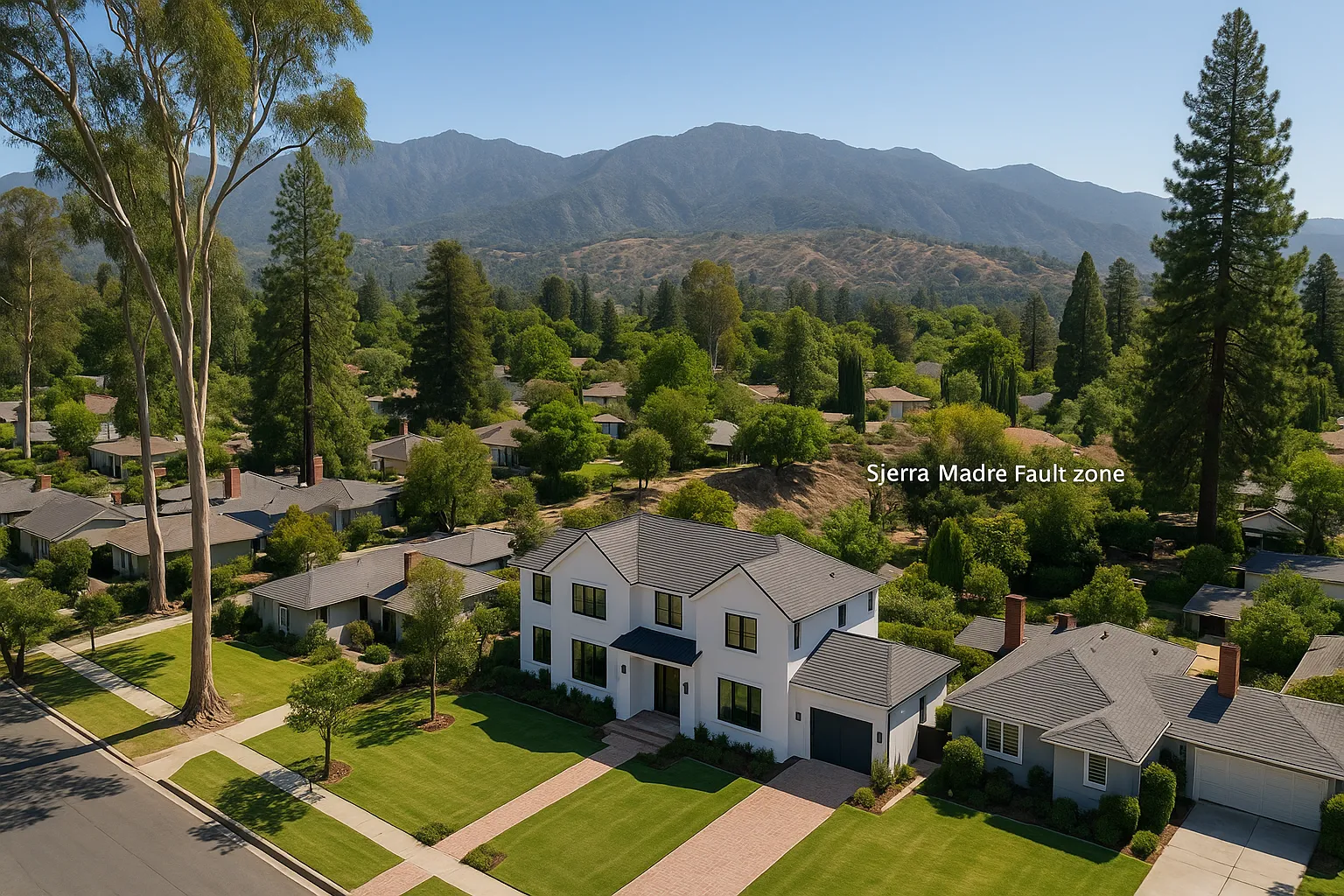
- **Proximity to fault systems**, including the Sierra Madre fault zone roughly 3–4 miles north
- **Mature tree root systems** — San Marino's famously tree-lined streets mean large eucalyptus, oak, and pine roots frequently encroach on foundation perimeters
Based on data from the California Geological Survey (2025), approximately **68% of the greater [Pasadena](/areas/pasadena)-San Marino area** sits on soils classified as moderately to highly expansive. That's not a reason to panic — it's a reason to maintain your foundation proactively.

---
## [How Much Does](/estimate) Foundation Repair Cost in San Marino?
This is the question every homeowner wants answered before they call anyone. Based on Vision [Roofing](/services/roof-repair)'s project data and 2026 contractor benchmarks across Los Angeles County, here's a realistic breakdown:
### Foundation Repair Cost by Type
| Repair Type | Typical Range (2026) | Average Cost | Timeline |
|---|---|---|---|
| Crack injection (epoxy/polyurethane) | $500 – $2,500 | $1,200 | 1–2 days |
| Mudjacking / slab leveling | $1,500 – $6,000 | $3,200 | 1–3 days |
| Pier installation (per pier) | $1,200 – $2,800 | $1,900 | 2–5 days |
| Full perimeter pier system | $18,000 – $55,000 | $32,000 | 1–3 weeks |
| Stem wall repair | $3,500 – $12,000 | $6,800 | 3–7 days |
| Drainage correction + grading | $2,000 – $8,500 | $4,500 | 2–5 days |
| Full foundation replacement | $45,000 – $120,000+ | $72,000 | 4–8 weeks |
These figures reflect **2026 projections based on 2025 Southern California contractor pricing with approximately 4% annual material and labor drift applied**.
### What Drives the Cost Up
Several factors push San Marino foundation repair costs toward the higher end:
- **Lot access limitations** — many San Marino properties have mature landscaping and narrow side yards that complicate equipment access
- **Permit requirements** — the City of San Marino Building & Safety Division requires permits for most structural foundation work, adding $400–$1,200 in permit fees plus inspection time
- **Historic home considerations** — San Marino has a significant number of pre-1960 homes with older concrete formulations and non-standard construction
- **Soil reports** — a geotechnical soil report, often required by the city for major repairs, runs **$1,500–$4,500**
### Real-World Cost Scenarios
**Scenario 1 — Pasadena-adjacent home, crack injection:** A homeowner on Virginia Road in San Marino noticed diagonal cracks running from the corners of two windows to the foundation. The diagnosis was minor differential settling. Epoxy crack injection at 6 points plus exterior drainage correction came to **$4,200 total**, completed in 2 days. No permits required at that scope.
**Scenario 2 — Full pier system, Huntington Drive area:** A 1947 ranch-style home showed significant floor slope (nearly 2 inches across 30 feet) and sticking doors throughout. Soil testing confirmed expansive clay movement. Installation of **18 helical piers** plus interior drainage system: **$41,500**, completed over 11 business days. The homeowner's insurance covered **$14,000** after documentation of soil movement as a covered peril.
**Scenario 3 — Stem wall failure, Oak Knoll area:** A 1955 home had a deteriorating stem wall on the north side — visible spalling, rebar corrosion, and water infiltration. Full stem wall reconstruction on two sides: **$9,800**, including waterproofing membrane and new drainage swale. Permit pulled and passed inspection within the standard City of San Marino 10-business-day window.
---
## Warning Signs: How to Tell If Your San Marino Home Has Foundation Problems
Most foundation issues give you warnings before they become emergencies. The problem is that homeowners often attribute these signs to other causes — old age, humidity, normal settling — and delay calling a foundation contractor in San Marino.
### Interior Warning Signs
- **Doors and windows that stick** or won't latch properly, especially if the problem developed gradually
- **Diagonal cracks** running at 45-degree angles from window or door corners — not vertical or horizontal cracks, which are typically less serious
- **Sloping or bouncy floors**, particularly in older homes with pier-and-beam construction
- **Gaps between walls and ceilings** or walls and floors
- **Cracks in drywall** that keep coming back even after patching
### Exterior Warning Signs
- **Visible cracks in the foundation itself** — horizontal cracks are the most serious and indicate lateral soil pressure
- **Bowing or leaning walls** in the basement or crawl space
- **Separation between the chimney and the main structure**
- **Uneven or sunken concrete** around the perimeter
- **Water pooling near the foundation** after rain
What is differential settling? Differential settling is when different parts of a foundation sink at different rates, causing the structure above to rack or twist. Unlike uniform settling, which happens gradually and evenly across a structure, differential settling creates the stress concentrations that produce cracking and structural damage.
**Industry benchmarks show** that homes in expansive soil regions like San Marino experience measurable foundation movement in **approximately 40% of structures** over a 30-year period, according to 2025 data from the American Society of Civil Engineers' Geo-Institute.

---
## What Causes Foundation Problems in San Marino Specifically?
Understanding the cause isn't just academic — it determines the right repair method. A pier system won't fix a drainage problem. Crack injection won't address expansive soil pressure. Getting the diagnosis right is everything.
### The Soil Moisture Cycle
San Marino's Mediterranean climate means wet winters and dry summers. Clay soils absorb moisture in winter, expand, and push upward (heave). In summer, they dry out, contract, and pull away from the foundation. This cycle, repeated annually for decades, fatigues concrete and causes gradual movement.
Irrigation systems make this worse. **Overwatering near the foundation** — especially with drip systems set too close to the stem wall — keeps soils in a perpetual expansion state on one side of the house while the other side dries out. The result is differential movement.
### Tree Roots
San Marino's tree canopy is one of its defining characteristics. It's also one of the leading causes of foundation issues in the city. Mature eucalyptus trees can have root systems extending **40–60 feet** from the trunk. Those roots extract moisture from clay soils, causing localized shrinkage directly under or adjacent to foundation elements.
According to a 2025 University of California Cooperative Extension study on urban tree impacts in Southern California, **trees within 20 feet of a structure** are associated with a **35% higher incidence** of foundation movement in expansive soil conditions.
### Poor Drainage and Grading
What is negative grading? Negative grading occurs when the ground around a structure slopes toward the foundation rather than away from it, directing surface water toward the building instead of away. In San Marino, negative grading is a common finding on properties where landscaping has been modified over the years without attention to drainage.
The fix is often straightforward — regrading the soil to achieve a **minimum 6-inch drop over the first 10 feet** away from the foundation — but it's frequently overlooked.
### Plumbing Leaks
A slow slab leak under a concrete foundation can erode the soil beneath it, creating voids that lead to sudden settling. **Slab leaks are responsible for an estimated 15–20% of foundation repair cases** in Southern California, based on 2025 IICRC (Institute of Inspection, Cleaning and Restoration Certification) regional data. If you're seeing foundation symptoms alongside unusually high water bills, get a plumbing inspection before the foundation work.
---
## How to Choose the Best Foundation Company in San Marino
Not every contractor who calls themselves a foundation specialist has the training or equipment to handle the specific conditions in San Marino. Here's what to look for:
### Licensing and Insurance
In California, foundation repair contractors must hold a **C-61/D-6 (Concrete-Related Services)** or **A (General Engineering)** license from the California State License Board (CSLB). Always verify the license number at cslb.ca.gov before signing anything. Vision Roofing holds CSLB License **#1069894** and carries full general liability and workers' compensation insurance.
"We've seen homeowners in Pasadena and San Marino get burned by unlicensed contractors offering rock-bottom prices," says the team at Vision Roofing. "The repair looks fine for 18 months, then the movement resumes because the root cause was never addressed. Licensing isn't just paperwork — it's a signal that the contractor knows what they're doing."
### What to Ask Before Hiring
1. Do you pull permits for this type of work in San Marino?
2. Will you provide a written transferable warranty?
3. Do you use a licensed geotechnical engineer or structural engineer on complex cases?
4. Can you provide references from San Marino or Pasadena specifically?
5. What's your process for addressing the underlying cause, not just the symptom?
### Red Flags to Avoid
- **Pressure to sign same-day** without a written proposal
- **No mention of permits** for work that clearly requires them
- **Unusually low bids** that don't include soil investigation or engineering review
- **Verbal warranties only** — get everything in writing
- **No physical address** or local presence
---
## The Foundation Repair Process: Step by Step
Knowing what to expect reduces anxiety and helps you hold your contractor accountable. Here's how a professional foundation repair job in San Marino typically unfolds:
1. **Initial inspection** — A qualified inspector walks the interior and exterior, documents cracks, measures floor levelness with a digital level, and assesses drainage conditions. This usually takes **1–3 hours** and should be free or low-cost.
2. **Soil investigation** — For significant repairs, a geotechnical engineer takes soil borings (typically **3–5 locations**) to determine soil type, moisture content, and bearing capacity. Report turnaround: **5–10 business days**.

3. **Engineering plan** — A structural engineer reviews the soil report and designs the repair system. For pier installations, this plan is required for permit submittal in San Marino.
4. **Permit application** — Submitted to the City of San Marino Building & Safety Division. Standard review time: **10–15 business days** for residential structural work.
5. **Site preparation** — Landscaping is temporarily removed or protected. Access routes are established. Utilities are located and marked.
6. **Foundation repair execution** — The actual repair work, ranging from **1 day** (crack injection) to **3 weeks** (full pier system with drainage correction).
7. **City inspection** — Required at specific milestones (pre-pour, post-installation). Inspector signs off before work is covered or completed.
8. **Backfill and restoration** — Excavated areas are backfilled, compacted, and graded. Landscaping is restored.
9. **Final documentation** — You receive the permit card, engineer's letter of completion, and warranty documentation.

---
## Foundation Repair vs. Foundation Replacement: Which Do You Need?
What is foundation replacement? Foundation replacement is the complete removal and reconstruction of a home's existing foundation system, typically required when the existing foundation has deteriorated beyond the point where repair is cost-effective or structurally sound.
Most San Marino homeowners don't need full replacement. **Approximately 85% of foundation issues** are addressable through targeted repair methods, according to industry benchmarks from the Foundation Repair Association (2025 annual report).
### When Repair Is Sufficient
- Localized cracking without significant displacement
- Differential settling of less than 2–3 inches
- Isolated drainage or soil moisture issues
- Stem wall deterioration on one or two sides
### When Replacement Makes More Sense
- Foundation has settled more than **4–6 inches** in multiple areas
- Concrete has carbonated throughout (rebar corrosion is widespread)
- Original construction used substandard materials (common in pre-1940 San Marino homes)
- The cost of comprehensive repair exceeds **60–70% of replacement cost**
For most San Marino properties, the decision comes down to a structural engineer's assessment — not a contractor's sales pitch. Get an independent engineering opinion before committing to either path on a major project.
---
## Does Homeowner's Insurance Cover Foundation Repair in California?
This question causes more frustration than almost any other in foundation repair. The short answer: **it depends on the cause**.
Standard California homeowner's insurance policies typically **exclude** foundation damage caused by:
- Gradual settling or soil movement
- Tree root intrusion
- Poor drainage or maintenance neglect
- Earthquake (requires separate earthquake policy through CEA)
They typically **cover** foundation damage caused by:
- Sudden and accidental water damage (burst pipe, slab leak)
- Fire damage to the foundation
- Vehicle impact
- In some cases, sudden soil collapse
**Important:** California's Earthquake Authority (CEA) offers earthquake insurance that can cover foundation damage from seismic events. Given San Marino's proximity to active fault systems, this is worth serious consideration. **2026 CEA premiums for San Marino** range from approximately **$1,800–$4,200 annually** for a typical single-family home, depending on construction type and coverage level.
Document everything when you first notice foundation symptoms. Dated photos, written descriptions, and prompt reporting to your insurer are critical if you want to pursue a claim.
If you're dealing with related roof or exterior damage alongside foundation issues, our [Roof Repair](/services/roof-repair?utm_source=blog&utm_medium=organic&utm_campaign=foundation-san-marino) team can assess the full picture — foundation movement frequently causes roofline distortion and flashing failures that aren't obvious from the ground.
---
## Preventive Maintenance: Protecting Your San Marino Foundation Long-Term
The best foundation repair is the one you never need. For San Marino homeowners, a few consistent habits dramatically reduce the risk of serious foundation movement:
- **Maintain consistent soil moisture** around the foundation perimeter. During dry summers, a soaker hose on a timer set **18–24 inches from the foundation** prevents extreme shrinkage cycles.
- **Keep gutters and downspouts clear** and direct discharge water at least **6 feet from the foundation**.
- **Regrade as needed** — check the slope around your foundation every 3–5 years, especially after landscaping changes.
- **Monitor trees** within 25 feet. Consider root barriers for trees planted after the home was built.
- **Schedule a professional inspection every 5–7 years**, or after any significant seismic event (M4.0+).
- **Address plumbing leaks immediately** — even a slow drip under a slab can erode soil over months.
Proactive maintenance costs a fraction of reactive repair. A drainage correction job that costs **$3,500–$5,000** today can prevent a pier system installation that costs **$30,000–$45,000** a decade from now.
While you're thinking about the overall integrity of your home's envelope, it's worth noting that a compromised foundation often goes hand-in-hand with roofline issues. Our [Energy Efficient Upgrade](/services/[energy](/services/energy-efficient-upgrade)-efficient-upgrade?utm_source=blog&utm_medium=organic&utm_campaign=foundation-san-marino) services can help identify where your home is losing efficiency due to structural movement, and our [Silicone Roof Coating](/services/[silicone](/services/silicone-coating)-coating?utm_source=blog&utm_medium=organic&utm_campaign=foundation-san-marino) service is a great way to protect your roof while you're addressing the foundation below.
For homes with [flat](/services/flat-roofing) or low-slope roofing that's been affected by structural movement, our [Flat Roofing](/services/flat-roofing?utm_source=blog&utm_medium=organic&utm_campaign=foundation-san-marino) team has experience diagnosing drainage failures caused by racking and settling.
If you're not sure where to start, the easiest first step is a conversation. [Book a Consultation](/book?utm_source=blog&utm_medium=organic&utm_campaign=foundation-san-marino) with our team — we can walk your property, identify what we're seeing, and give you an honest assessment of what needs attention now versus what can wait.

---
## Frequently Asked Questions
### How much does foundation repair cost in San Marino, CA?
Based on 2026 project data across Los Angeles County, foundation repair in San Marino typically ranges from **$1,500 for minor crack injection** to **$55,000+ for a full perimeter pier system**. The average mid-scope repair — addressing differential settling with 10–15 piers plus drainage correction — runs **$22,000–$38,000**. Costs are higher than the national average due to California labor rates, permit requirements, and the complexity of expansive clay soil conditions.
### How long does foundation repair take in San Marino?
Timeline depends heavily on scope and permit requirements. Minor crack injection can be completed in **1–2 days** without permits. A mid-scope pier installation with engineering and city permits typically takes **3–5 weeks total** from contract signing to final inspection — roughly 1–2 weeks for engineering and permits, 5–10 business days for the actual installation, and a few days for city inspection and closeout. Full foundation replacement can take **8–16 weeks** including demolition, reconstruction, and inspections.
### Does foundation repair require a permit in San Marino?
Yes, for most structural foundation work. The City of San Marino Building & Safety Division requires permits for pier installations, stem wall repairs, and any work involving structural modifications. Permit fees typically run **$400–$1,200** for residential foundation work. Unpermitted foundation repairs can create serious problems when you sell — buyers' lenders often require documentation of permitted structural work. Always pull the permit.
### What are the signs of foundation problems in a San Marino home?
The most common signs include **diagonal cracks running from window and door corners**, doors and windows that stick or won't close properly, sloping or uneven floors, gaps between walls and ceilings, and visible cracks in the exterior foundation or stem wall. In San Marino specifically, watch for these symptoms following unusually wet winters or extended dry spells, when the clay soil moisture cycle is most extreme.
### Is foundation damage covered by homeowner's insurance in California?
Standard homeowner's insurance in California typically **does not cover** foundation damage caused by gradual settling, soil expansion, tree roots, or poor drainage — which are the most common causes in San Marino. Coverage may apply if the damage results from a sudden event like a burst pipe or slab leak. Earthquake damage requires a separate CEA (California Earthquake Authority) policy. Document all symptoms with dated photos and contact your insurer promptly if you believe a covered event caused the damage.
### How do I find a licensed foundation contractor in San Marino?
Verify any contractor's license at **cslb.ca.gov** before signing a contract. Foundation contractors in California should hold a **C-61/D-6** or **A (General Engineering)** license. Ask for proof of general liability and workers' compensation insurance, request local references from San Marino or Pasadena specifically, and confirm they pull permits for structural work. Be cautious of contractors who offer unusually low bids without soil investigation or who pressure you to sign same-day. [Contact Vision Roofing](/contact?utm_source=blog&utm_medium=organic&utm_campaign=foundation-san-marino) — CSLB License #1069894 — for a straightforward assessment.
### What type of foundation is most common in San Marino homes?
San Marino's residential housing stock spans several eras and foundation types. Homes built before 1950 commonly have **raised foundation systems** with concrete perimeter stem walls and wood floor framing. Post-1950 construction shifted toward **concrete slab-on-grade** foundations. Some mid-century homes use a hybrid approach. The repair approach differs significantly between these systems — raised foundations allow access to the underfloor structure, while slab foundations require different methods for leveling and void-filling.
### How much does a foundation inspection cost in San Marino?
A basic visual inspection by a foundation contractor is often **free or $150–$350**. A formal geotechnical soil investigation with boring and laboratory analysis runs **$1,500–$4,500** depending on the number of boring locations and the complexity of the report. A structural engineer's assessment for a specific repair design typically costs **$800–$2,500**. For significant repairs, these upfront costs are well worth it — they ensure the repair method is appropriate and provide documentation for permits and insurance.
### Can foundation problems affect my home's resale value in San Marino?
Yes, significantly. **Unrepaired foundation issues can reduce a home's market value by 10–30%** in the San Marino real estate market, based on 2025 appraisal industry benchmarks. More practically, most buyers' lenders require foundation issues to be resolved before closing. Properly repaired and permitted foundation work, accompanied by a structural engineer's letter and transferable warranty, typically has a **neutral to positive** effect on resale — buyers are reassured that the issue was addressed professionally.
### How do I prevent foundation problems in my San Marino home?
The most effective prevention strategies for San Marino's clay soil conditions are **consistent soil moisture management** (using soaker hoses during dry months to prevent extreme shrinkage), proper drainage grading that directs water away from the foundation, regular gutter maintenance, and monitoring of mature trees within 25 feet of the structure. Schedule a professional foundation inspection every 5–7 years, or after any significant seismic event. Addressing minor drainage issues early — typically **$2,000–$5,000** — can prevent major structural repairs costing **$30,000–$55,000** down the road.
---
The most important thing to understand about **foundation San Marino** issues is that timing matters. The homeowners who end up spending $40,000+ on pier systems are almost always the ones who noticed the warning signs two or three years earlier and decided to wait. The ones who spent $4,000 on drainage correction and crack injection are the ones who made the call early.
If you're seeing any of the warning signs described here, the right move is a professional set of eyes on the property — not more Googling. [Get a free estimate](/estimate?utm_source=blog&utm_medium=organic&utm_campaign=foundation-san-marino) from our team, or [book a consultation](/book?utm_source=blog&utm_medium=organic&utm_campaign=foundation-san-marino) and we'll walk the property with you. We serve San Marino, Pasadena, [Glendale](/areas/glendale), [Beverly Hills](/areas/beverly-hills), [Santa Monica](/areas/santa-monica), and greater Los Angeles — and we're known for showing up fast and giving straight answers.
Your foundation is the one part of your home you genuinely can't afford to defer. Everything else sits on top of it.
---
**Ready to start your your project in Los Angeles?** [Book a free consultation](/book?utm_source=blog&utm_medium=organic&utm_campaign=foundation-in-san-marino-expert-guide-for-california-homeowners-2026) — we'll come walk through your space and give you straight numbers, no pressure. Or learn more about our [Metal Roofing services](/services/[metal](/services/metal-roofing)-roofing?utm_source=blog&utm_medium=organic&utm_campaign=foundation-in-san-marino-expert-guide-for-california-homeowners-2026).