How to Choose the Right Tile Roofing for Your Santa Monica Home (2026 Guide)
By Ben Shitrit · September 23, 2026 · Last updated October 7, 2026 · Cost Guide
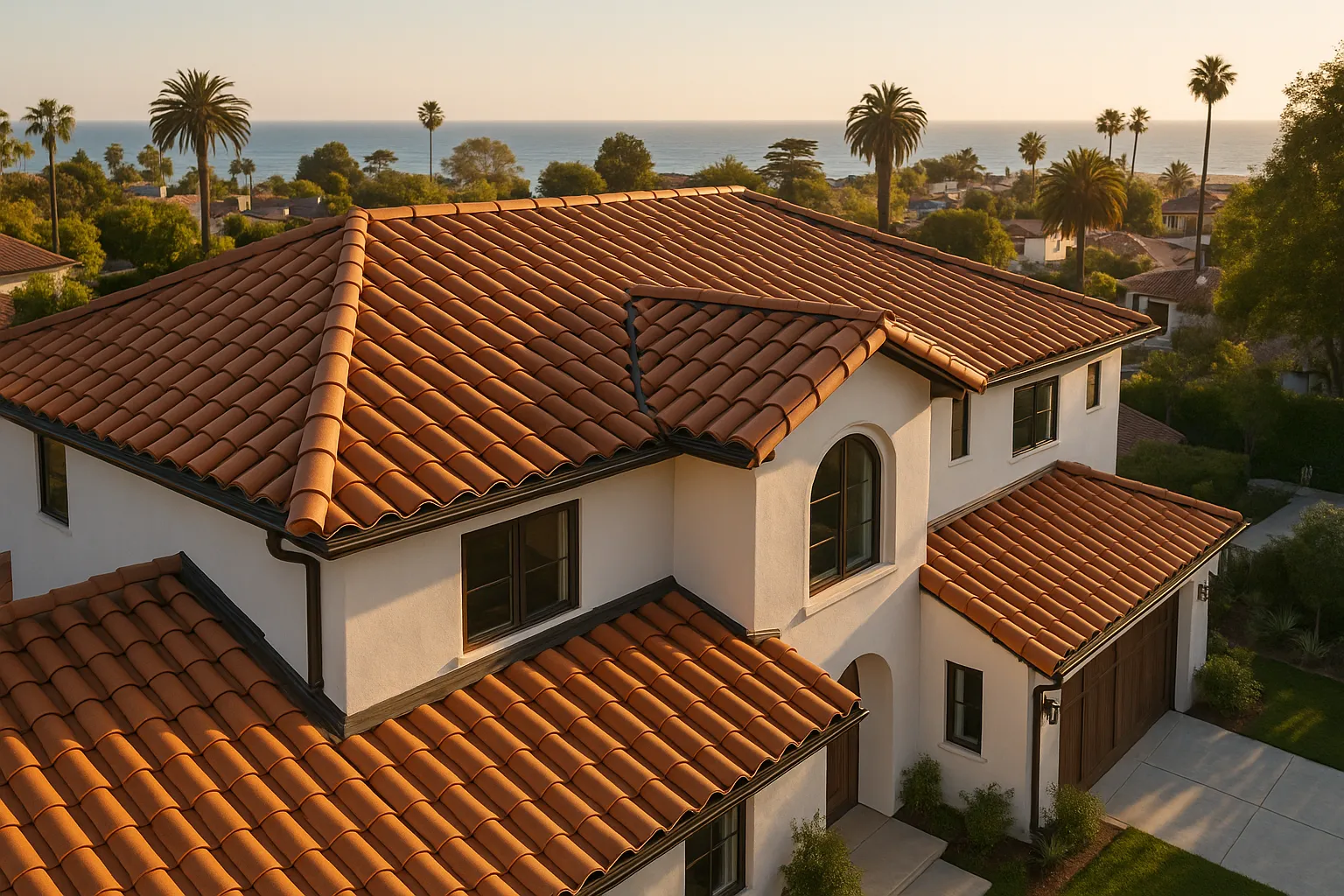
When was the last time you really looked at the rooflines in your [Santa Monica](/areas/santa-monica) neighborhood? Knowing how to choose the right [tile roofing](/services/tile-[roofing](/services/roof-repair)) for your Santa Monica home is one of the most important decisions you'll make as a homeowner here — and it's more nuanced than most people expect. The coastal climate, local building codes, HOA restrictions, and your home's structural capacity all factor in before you even start comparing colors.
After installing tile roofs across Santa Monica, [Beverly Hills](/areas/beverly-hills), and [Pasadena](/areas/pasadena) for years, we've seen homeowners make the same costly mistakes: choosing the wrong material for a coastal environment, underestimating structural load requirements, or picking a style that doesn't survive the marine layer humidity. This guide cuts through the noise.
---
## What Is [Tile Roofing](/services/tile-roofing), and Why Does It Matter in Santa Monica?
What is tile roofing? Tile roofing is a roofing system made from individual overlapping units — typically clay, concrete, or slate — installed in rows from the eave to the ridge, designed to shed water while withstanding wind, fire, and UV exposure for decades.
In Santa Monica specifically, tile roofing is the dominant premium choice for good reason. The coastal Mediterranean climate — warm, dry summers and mild, wet winters — mirrors the climates where clay and concrete tile have been used for centuries. **Tile roofs in Southern California regularly last 40–70 years**, compared to 20–25 years for asphalt [shingle](/services/shingle-roofing) roofs in the same environment.
The marine layer that rolls in off the Pacific every morning creates persistent humidity at the roof surface. Materials that trap moisture or degrade under UV exposure fail faster here. Tile, by contrast, is dimensionally stable and doesn't absorb enough moisture to cause rot or mold at the structural level.
"Santa Monica homeowners are essentially buying a once-in-a-generation roof when they go with quality tile," says the team at Vision Roofing. "The upfront cost is higher, but the 50-year math almost always favors tile over asphalt."

---
## How to Choose the Right Tile Roofing for Your Santa Monica Home: Start with Material
The single biggest decision you'll make is material. Each tile type performs differently, costs differently, and looks different — and not every option is appropriate for every Santa Monica home.
### Clay Tile
What is clay tile roofing? Clay tile roofing is made from natural terracotta or refined clay fired at high temperatures, producing a dense, weather-resistant unit that is inherently fire-resistant (Class A rating) and UV-stable.
Clay tile is the traditional choice for Spanish Colonial, Mediterranean, and Mission-style homes — which make up a significant portion of Santa Monica's housing stock. **Clay tile typically costs $900–$1,800 per square (100 sq ft) installed in the [Los Angeles](/areas/los-angeles) area in 2026**, based on Vision Roofing project data across recent Santa Monica and Beverly Hills jobs.
The downside: clay tile is heavy. A standard clay tile roof weighs **900–1,200 lbs per square**, which means many homes require structural reinforcement before installation. Budget an additional **$3,000–$8,000** for structural upgrades if your home wasn't originally built for tile.
### Concrete Tile
What is concrete tile roofing? Concrete tile roofing uses a mixture of Portland cement, sand, and water, molded under high pressure and cured to create a durable, fire-resistant tile that can mimic the appearance of clay, slate, or wood shake.
Concrete tile costs **$700–$1,400 per square installed** — roughly 15–20% less than comparable clay. It's slightly heavier than clay (up to **1,300 lbs per square**), but modern lightweight concrete tile options have brought that down to **750–900 lbs per square**, making them structurally friendlier. Concrete tile is an excellent choice for homeowners who want the tile aesthetic without the full clay price tag.
### Slate Tile
What is slate tile roofing? Slate tile roofing uses natural quarried stone split into thin, [flat](/services/flat-roofing) tiles — one of the most durable roofing materials on earth, with documented lifespans exceeding 100 years when properly installed.
Slate is the premium option, running **$1,500–$3,000+ per square installed** in the Santa Monica market. It's genuinely stunning on the right home — particularly Craftsman, Tudor, or European-inspired architecture. The weight challenge is real: natural slate runs **800–1,500 lbs per square**, and structural assessment is essentially mandatory. Synthetic slate (made from rubber or polymer composites) offers a lighter alternative at **$600–$1,200 per square** with a 40–50 year lifespan.
---
## Tile Roofing Material Comparison Table
| Material | Cost Per Square (Installed) | Weight (lbs/sq) | Lifespan | Fire Rating | Best Style Match |
|---|---|---|---|---|---|
| Clay Tile | $900–$1,800 | 900–1,200 | 50–70 yrs | Class A | Spanish, Mediterranean |
| Concrete Tile | $700–$1,400 | 750–1,300 | 40–50 yrs | Class A | Versatile |
| Natural Slate | $1,500–$3,000+ | 800–1,500 | 75–100+ yrs | Class A | Craftsman, Tudor |
| Synthetic Slate | $600–$1,200 | 200–400 | 40–50 yrs | Class A | Versatile |
| Lightweight Clay | $1,000–$1,900 | 550–750 | 50–70 yrs | Class A | Spanish, Modern |
*2026 projections based on Vision Roofing project data and 2025 NAHB regional cost benchmarks, adjusted ~4% for material and labor inflation.*
---
## How Does Santa Monica's Climate Affect Your Tile Roofing Choice?
Santa Monica sits in USDA Climate Zone 10b, which means virtually no freeze-thaw cycles, moderate rainfall concentrated in winter months, persistent coastal humidity, and intense UV exposure year-round. These conditions shape every material decision.
**Freeze-thaw is not a concern here** — which is good news for concrete tile, which can crack in climates with hard winters. In Santa Monica, both clay and concrete perform reliably without the spalling risk you'd see in colder climates.
The bigger coastal concern is **salt air corrosion**. Metal components — fasteners, flashing, ridge caps — need to be corrosion-resistant. Stainless steel or hot-dipped galvanized fasteners are standard practice for any tile installation within a mile of the ocean. Inferior fasteners can fail in as little as **8–12 years** in a coastal environment, causing tiles to slip or crack.
UV intensity in Southern California is among the highest in the continental U.S. Clay tile holds its color naturally because the pigment is fired into the material. Concrete tile uses surface-applied color that can fade **15–25% over 10 years** without UV-resistant coatings — something to factor into your long-term aesthetic expectations.

---
## Which Tile Roofing Profiles Work Best for Santa Monica Homes?
Beyond material, tile comes in several profile shapes — and the right profile depends on your roof pitch, architectural style, and drainage needs.
### S-Tile (Double Roman / Spanish)
The classic S-curve profile is the most common tile shape in Santa Monica and greater Los Angeles. It channels water efficiently, handles the occasional heavy rain event well, and suits Spanish Colonial, Mediterranean, and Modern Farmhouse styles. **Minimum recommended pitch: 4:12.**
### Low-Profile (Flat) Tile
Flat or low-profile tile has a sleek, modern appearance that works well on contemporary and transitional homes. It's increasingly popular in Santa Monica's newer builds and remodels. Flat tile requires careful underlayment selection because it doesn't shed water as aggressively as high-profile options. **Minimum recommended pitch: 4:12, with enhanced underlayment for lower pitches.**
### High-Profile (Barrel / Mission)
Barrel tile — the half-cylinder shape — is the most traditional California mission look. It creates dramatic shadow lines and excellent ventilation under the tile. It's heavier and more expensive to install than flat profiles, but the aesthetic payoff on the right home is significant. **Minimum recommended pitch: 3:12** with proper underlayment.
---
## [How Much Does](/estimate) Tile Roofing Cost in Santa Monica? (Real Project Examples)
This is where most homeowners need straight answers, not vague ranges. Here's what tile roofing actually costs in the Santa Monica market in 2026, based on real project data.
**Real-world example #1:** A homeowner on 4th Street in Santa Monica replaced a 2,200 sq ft clay tile roof on a 1940s Spanish Colonial. The project included structural reinforcement for the original framing, new underlayment, and full flashing replacement. **Total cost: $42,800.** The roof carries a 50-year material warranty and a 10-year workmanship warranty.
**Real-world example #2:** A Brentwood homeowner chose lightweight concrete tile on a 1,800 sq ft ranch-style home. No structural upgrades were needed. The project was completed in **5 business days**. **Total cost: $28,400**, including tear-off of the existing asphalt shingle roof.
**Real-world example #3:** A homeowner in Pasadena opted for natural slate on a 1920s Craftsman bungalow — 1,600 sq ft of roof area. Structural reinforcement added **$6,200** to the project. Total investment: **$54,600**. The homeowner's insurance agent confirmed the slate roof qualified for a **15% premium reduction** due to its Class A fire rating and superior hail resistance.
### Cost Breakdown by Project Component
- **Tear-off of existing roof:** $1.50–$3.00 per sq ft
- **Structural assessment/engineering:** $500–$1,500
- **Structural reinforcement (if needed):** $3,000–$8,000
- **Underlayment installation:** $0.75–$1.50 per sq ft
- **Tile material:** $400–$1,800 per square (material only)
- **Labor (installation):** $300–$600 per square
- **Flashing and ridge work:** $800–$2,500
- **Permit fees (City of Santa Monica):** $400–$1,200 depending on project scope
Industry benchmarks from the 2025 NAHB Remodeling Market Index show that **roofing labor costs in the Los Angeles metro increased approximately 6.2% year-over-year** from 2024 to 2025, with 2026 projections indicating continued upward pressure of 3–5% due to sustained demand and contractor availability constraints.
---
## What Are the Local Building Code Requirements for [Tile Roofing in Santa Monica](/areas/santa-monica/tile-roofing)?
Santa Monica falls under the California Building Code (CBC), with local amendments. A few requirements that directly affect tile roofing decisions:
- **Wind uplift requirements:** Santa Monica's coastal exposure means tile installations must meet wind uplift standards for Exposure Category D per ASCE 7. This affects fastening patterns — most installations require two fasteners per tile rather than one.
- **Fire resistance:** The City of Santa Monica requires a minimum Class B fire-rated roof assembly; most tile systems exceed this with a Class A rating.
- **Permit requirement:** Any full roof replacement requires a building permit. [Roof repair](/services/roof-repair?utm_source=blog&utm_medium=organic&utm_campaign=how-to-choose-right-tile-roofing-santa-monica) work under a certain dollar threshold may not require a permit, but full re-roofing always does.
- **Structural load documentation:** For clay or natural slate, the City may require a structural engineer's letter confirming the existing framing can support the tile weight.
Vision Roofing (License #1069894) handles permit applications as part of every full [tile roofing](/services/tile-roofing?utm_source=blog&utm_medium=organic&utm_campaign=how-to-choose-right-tile-roofing-santa-monica) project — homeowners shouldn't be navigating the Santa Monica Building and Safety Division on their own.
---
## How Long Does Tile Roofing Last, and What Maintenance Does It Need?
Tile roofing is one of the lowest-maintenance roofing systems available — but "low maintenance" doesn't mean "no maintenance." Here's what the realistic maintenance picture looks like.
**Expected lifespans by material:**
- Clay tile: **50–70 years** (some historic California clay tile roofs have lasted 80+ years)
- Concrete tile: **40–50 years**
- Natural slate: **75–100+ years**
- Synthetic slate: **40–50 years**
**Annual maintenance tasks:**
1. Clear debris from valleys and gutters (especially after Santa Ana wind events)
2. Inspect for cracked or slipped tiles — typically **2–5 tiles per year** on an aging roof
3. Check flashing integrity around chimneys, skylights, and penetrations
4. Inspect the ridge cap mortar for cracking or separation
5. Look for moss or algae growth — more common on north-facing slopes in coastal environments
**Cost of routine maintenance:** A professional tile roof inspection and minor repair service in the Los Angeles area typically runs **$350–$750 per visit** in 2026. Catching a cracked tile early costs **$150–$400 to repair**; ignoring it can lead to water intrusion that costs **$2,000–$8,000** in interior damage.
If your tile roof is in generally good condition but showing age on the underlayment, a [silicone roof coating](/services/[silicone](/services/silicone-coating)-coating?utm_source=blog&utm_medium=organic&utm_campaign=how-to-choose-right-tile-roofing-santa-monica) applied to the underlayment system can extend service life by **10–15 years** at a fraction of replacement cost.
---
## Is Tile Roofing [Energy](/services/energy-efficient-upgrade) Efficient for Santa Monica Homes?
Tile roofing has a meaningful energy efficiency advantage over asphalt shingle — and in Southern California's climate, that translates directly to lower cooling costs.
The air gap created between the tile and the roof deck (especially in barrel and S-tile profiles) acts as a thermal break, reducing heat transfer into the attic. **Studies from the Florida Solar Energy Center found that tile roofs can reduce attic temperatures by 25–50°F compared to direct-nailed asphalt shingle**, which is directly applicable to Southern California's climate.
Light-colored or "cool roof" tile options can achieve a solar reflectance index (SRI) of **30–70**, compared to **5–20** for standard dark asphalt shingle. California's Title 24 energy code now incentivizes high-SRI roofing products — and many Santa Monica homeowners are combining cool tile roofs with [energy efficient upgrades](/services/energy-efficient-upgrade?utm_source=blog&utm_medium=organic&utm_campaign=how-to-choose-right-tile-roofing-santa-monica) to maximize both comfort and utility savings.
Based on 2025 Southern California Edison data, homeowners who upgraded from dark asphalt to light-colored tile reported cooling cost reductions of **12–18% annually** — roughly **$400–$900/year** on a typical Santa Monica home.

---
## How to Choose the Right Tile Roofing Contractor in Santa Monica
Choosing the right tile roofing for your Santa Monica home is only half the equation. The contractor you hire determines whether that material performs as it should for the next 50 years — or starts leaking in year three.
### Step-by-Step: Vetting a Tile Roofing Contractor
1. **Verify CSLB licensure.** Any roofing contractor in California must hold an active C-39 (Roofing) license. Check at cslb.ca.gov. Vision Roofing's license number is **#1069894** — verify it directly.
2. **Confirm tile-specific experience.** Ask for references from tile roof installations specifically — not just general roofing. Tile installation requires different skills than shingle work.
3. **Request a written scope of work.** A legitimate contractor will specify the tile brand and model, underlayment type, fastener specification, and warranty terms before you sign anything.
4. **Check for manufacturer certification.** Major tile manufacturers (Boral, Eagle Roofing, Ludowici) offer certified contractor programs. Certified installers have been trained on proper installation techniques for that specific product.
5. **Understand the warranty structure.** You want both a material warranty (from the manufacturer) and a workmanship warranty (from the contractor). **Industry standard workmanship warranties run 5–10 years**; top contractors offer 10+ years.
6. **Get at least three bids.** Tile roofing is a significant investment. Bids that are **more than 20% below** the median should raise questions about material quality, underlayment spec, or labor practices.
7. **Confirm permit handling.** Your contractor should pull the permit, not ask you to do it yourself.
For a no-pressure conversation about your specific home, [book a consultation](/book?utm_source=blog&utm_medium=organic&utm_campaign=how-to-choose-right-tile-roofing-santa-monica) with Vision Roofing — we typically respond within a few hours, which is something we're genuinely proud of in a market where getting a callback can take weeks.
---
## How to Choose the Right Tile Roofing: Eco-Friendly and Sustainable Options
Sustainability is an increasingly important factor for Santa Monica homeowners — and tile roofing has a genuinely strong environmental story.
Clay and concrete tile are made from abundant natural materials and require minimal processing compared to composite roofing products. **Clay tile is 100% recyclable** — old clay tiles can be crushed and reused as aggregate or repurposed in landscaping. Concrete tile is similarly recyclable.
The longevity factor is perhaps the biggest environmental argument. A tile roof that lasts 60 years replaces **two or three asphalt shingle roofs** over the same period — each of which generates approximately **2–4 tons of landfill waste**. The 2025 EPA Sustainable Materials Management report estimated that roofing materials account for **approximately 11 million tons of landfill waste annually** in the U.S., with asphalt shingle comprising the majority.
For homeowners interested in a [metal roofing](/services/metal-roofing?utm_source=blog&utm_medium=organic&utm_campaign=how-to-choose-right-tile-roofing-santa-monica) alternative that shares tile's longevity with an even stronger recyclability story, that's worth exploring as a parallel option — particularly for contemporary-style homes where the tile aesthetic isn't a requirement.
---
## Tile Roofing vs. Other Roofing Types: How Does It Compare?
Not every Santa Monica home is the right candidate for tile. Here's an honest comparison to help you make the right call.
| Roofing Type | Avg. Installed Cost/Sq | Lifespan | Weight | Fire Rating | Best For |
|---|---|---|---|---|---|
| Clay Tile | $900–$1,800 | 50–70 yrs | Heavy | Class A | Spanish/Mediterranean |
| Concrete Tile | $700–$1,400 | 40–50 yrs | Heavy | Class A | Most styles |
| Asphalt Shingle | $350–$650 | 20–25 yrs | Light | Class A–C | Budget-focused |
| [Metal Roofing](/services/metal-roofing) | $800–$1,600 | 40–70 yrs | Light | Class A | Modern/Contemporary |
| Flat/TPO | $500–$900 | 20–30 yrs | Light | Class A | Low-slope roofs |
| Slate | $1,500–$3,000+ | 75–100+ yrs | Very Heavy | Class A | Historic/Craftsman |
If your home has a low-slope or flat roof section, tile isn't the right solution for that area — but [flat roofing](/services/flat-roofing?utm_source=blog&utm_medium=organic&utm_campaign=how-to-choose-right-tile-roofing-santa-monica) systems like TPO or modified bitumen handle those zones well alongside a tile field on the steeper sections.
For homes that want the energy efficiency of tile without the structural weight, [shingle roofing](/services/shingle-roofing?utm_source=blog&utm_medium=organic&utm_campaign=how-to-choose-right-tile-roofing-santa-monica) with high-SRI products is a legitimate alternative — though the lifespan comparison is hard to ignore when you're planning to stay in your home long-term.
---
## Frequently Asked Questions
### How much does tile roofing cost in Santa Monica in 2026?
Based on Vision Roofing project data, tile roofing in Santa Monica costs **$700–$1,800 per square (100 sq ft) installed** depending on material — concrete tile on the lower end, natural slate at the top. A typical 2,000 sq ft Santa Monica home with a moderate-pitch roof runs **$28,000–$45,000** for a full tile replacement, including tear-off, underlayment, and permit. Structural reinforcement, if needed, adds another **$3,000–$8,000**.
### How long does tile roofing last in Southern California?
Clay tile typically lasts **50–70 years** in the Southern California climate, concrete tile **40–50 years**, and natural slate **75–100+ years**. The coastal environment in Santa Monica is actually favorable for tile longevity because there are no freeze-thaw cycles — the primary degradation factors are UV exposure and the quality of the underlayment beneath the tiles, which typically needs replacement at **20–30 years** even when the tile itself is still sound.
### What type of tile roofing is best for coastal Santa Monica homes?
Clay tile is the top performer in coastal environments because its color is fired into the material (resisting UV fade) and it is inherently resistant to salt air degradation. Lightweight concrete tile is a strong second choice. For any tile installation within a mile of the ocean, stainless steel or hot-dipped galvanized fasteners are non-negotiable — standard galvanized fasteners can corrode in **8–12 years** in a marine environment, leading to tile slippage.
### Does tile roofing require structural reinforcement?
It depends on your home's original construction. Homes built in California after the 1980s were often designed with tile loads in mind; older homes — particularly pre-war bungalows and 1950s ranch-styles — frequently require structural assessment and sometimes reinforcement. A structural engineer's review costs **$500–$1,500**, and reinforcement work (sistering rafters, adding purlins) typically runs **$3,000–$8,000**. Lightweight tile options can sometimes eliminate the need for reinforcement entirely.
### How long does a tile roof installation take?
A typical tile roof replacement on a 1,800–2,500 sq ft Santa Monica home takes **5–10 business days** from tear-off to final inspection. Larger homes, complex roof geometry (multiple valleys, dormers, skylights), or projects requiring structural work can extend the timeline to **2–3 weeks**. Weather delays are rare in Santa Monica's mild climate but can occur during the December–March rainy season.
### What maintenance does a tile roof need in Santa Monica?
Annual maintenance should include clearing debris from valleys and gutters (especially after Santa Ana wind events), inspecting for cracked or slipped tiles, and checking flashing around penetrations. Professional inspection runs **$350–$750** annually. The underlayment beneath the tile is the component most likely to need attention first — most underlayment systems have a **20–30 year lifespan**, after which re-underlayment can extend the tile roof's life without full replacement.
### Are tile roofs energy efficient?
Yes — tile roofs are among the most energy-efficient roofing options available. The air gap between tile and roof deck reduces attic heat gain significantly; research from the Florida Solar Energy Center found tile roofs can reduce attic temperatures by **25–50°F** compared to direct-nailed asphalt shingle. Light-colored tile achieves solar reflectance index (SRI) values of **30–70**, compared to **5–20** for standard dark asphalt. Santa Monica homeowners have reported cooling cost reductions of **12–18%** after switching from dark asphalt to cool-roof tile.
### Do I need a permit for tile roofing in Santa Monica?
Yes. Any full roof replacement in Santa Monica requires a building permit from the City's Building and Safety Division. Permit fees typically run **$400–$1,200** depending on project scope and valuation. A reputable contractor will handle permit application and scheduling of required inspections — you should never be asked to pull your own permit for a contractor's work. Vision Roofing handles all permitting as a standard part of every project.
### Can I install tile roofing over my existing shingles?
In most cases, no — and we strongly advise against it even where code technically allows it. Installing tile over existing shingles adds significant weight to a system already carrying an old shingle layer, and it prevents proper inspection and replacement of the underlayment. A clean tear-off ensures the roof deck is inspected, any rot or damage is addressed, and the new underlayment is installed correctly. The cost savings from skipping tear-off (**$1.50–$3.00/sq ft**) rarely justify the long-term risk.
### How do I know if my current roof needs replacement vs. repair?
If your tile roof is under 30 years old and the underlying structure is sound, targeted [roof repair](/services/roof-repair?utm_source=blog&utm_medium=organic&utm_campaign=how-to-choose-right-tile-roofing-santa-monica) is usually the right call — replacing cracked tiles and resealing flashing can add **10–15 years** of service life. If the underlayment is failing (visible water intrusion, staining on the decking, or age beyond 25 years), a full re-roof is the more economical long-term choice. [Get a free estimate](/estimate?utm_source=blog&utm_medium=organic&utm_campaign=how-to-choose-right-tile-roofing-santa-monica) to get a clear picture of where your roof actually stands.
---
Choosing the right tile roofing for your Santa Monica home comes down to four things: the right material for your climate and architecture, a structural assessment before anything else, a contractor with verifiable tile-specific experience, and a realistic budget that accounts for the full scope — not just the tile itself.
The homes in Santa Monica that have the most beautiful, problem-free tile roofs 30 years from now are the ones where the homeowner asked the right questions upfront. If you're at that stage, [contact Vision Roofing](/contact?utm_source=blog&utm_medium=organic&utm_campaign=how-to-choose-right-tile-roofing-santa-monica) and tell us what you're working with — we'll give you a straight answer about what your home actually needs.
---
**Ready to start your your project in Los Angeles?** [Book a free consultation](/book?utm_source=blog&utm_medium=organic&utm_campaign=how-to-choose-the-right-tile-roofing-for-your-santa-monica-home-2026-guide) — we'll come walk through your space and give you straight numbers, no pressure. Or learn more about our [Metal Roofing services](/services/metal-roofing?utm_source=blog&utm_medium=organic&utm_campaign=how-to-choose-the-right-tile-roofing-for-your-santa-monica-home-2026-guide).