Top 5 Signs Your Roof Needs Repair in Burbank (2026 Guide for Homeowners)
By Ben Shitrit · July 1, 2026 · Last updated July 15, 2026 · Roof Repair
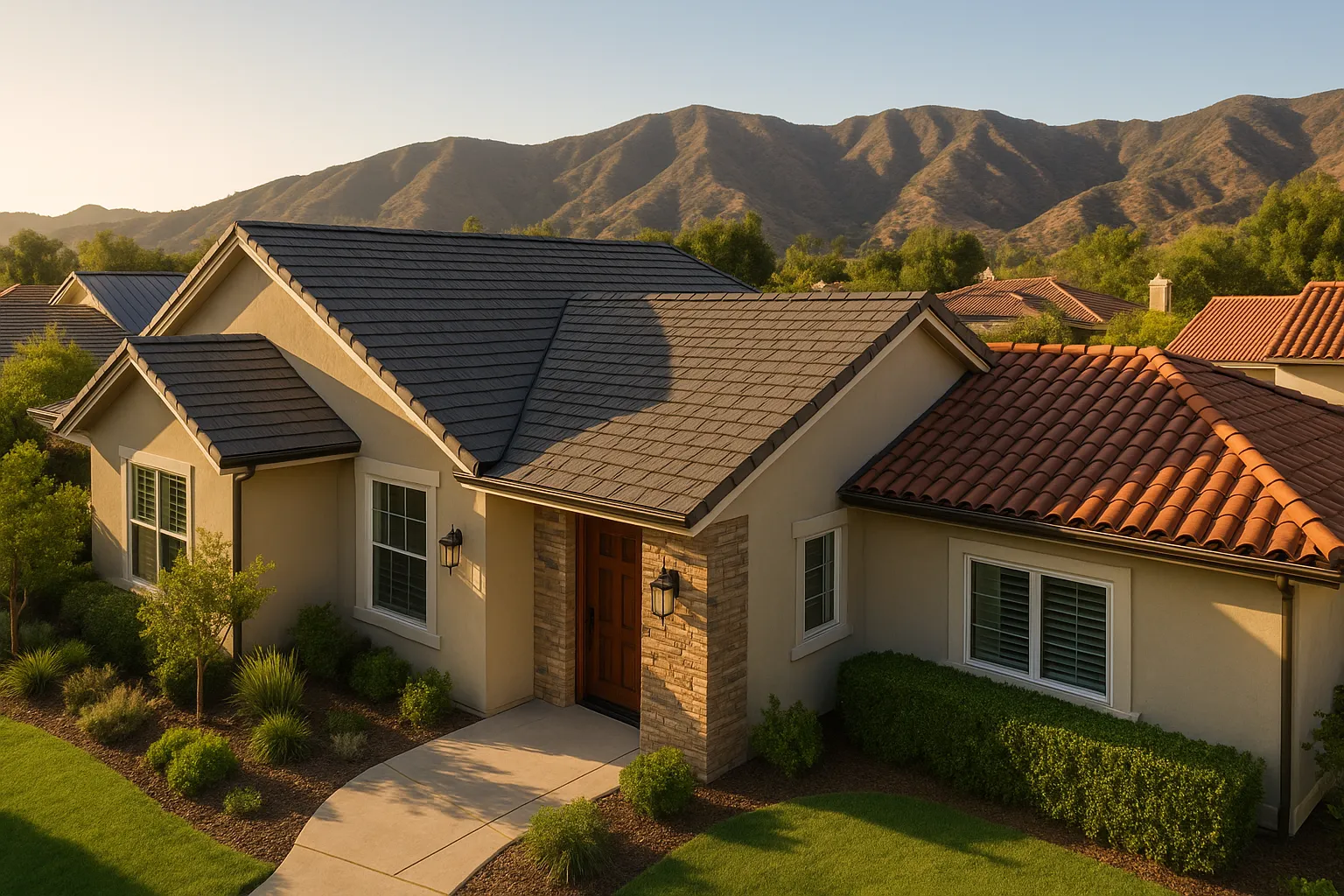
## Top 5 Signs Your Roof Needs Repair in [Burbank](/areas/burbank)
After 15 years of climbing roofs across the San Fernando Valley, the number-one thing we hear from Burbank homeowners is some version of this: "I knew something was wrong, I just didn't know how serious it was." The top 5 signs your roof needs repair in Burbank are often subtle at first — a handful of granules in the gutter, a faint water stain on the ceiling — but left unchecked, they turn into five-figure problems fast. **In 2026, the average emergency [roof repair](/services/roof-repair) in Burbank runs between $1,800 and $6,500**, depending on how long the damage went unnoticed.
Burbank sits in a climate zone that punishes roofs in ways most homeowners don't anticipate. You've got the Santa Ana winds whipping through the Verdugo Mountains every fall, intense UV exposure pushing summer temperatures past 100°F, and then those rare but intense winter rain events that expose every weak point in a roofing system. It's not a forgiving environment. And unlike Seattle or Houston, where water damage is an obvious, constant concern, Burbank's damage often hides — drying out between rains, masking leaks until the next storm reopens them.
This guide is written for Burbank homeowners who want to catch problems early, understand what they're actually looking at, and make smart decisions before a minor repair becomes a full replacement.
---
## Why Burbank's Climate Makes Roof Inspections Non-Negotiable
Burbank's roofing challenges are specific to its geography. The city sits at the eastern end of the San Fernando Valley, which creates a funnel effect for Santa Ana wind events. **Wind gusts regularly exceed 50–60 mph** during peak Santa Ana conditions in October and November, which is enough to lift improperly secured [shingles](/services/shingle-roofing), crack [tile](/services/tile-roofing), and force water under flashing.
Summer UV exposure is equally brutal. Industry benchmarks from the National Roofing Contractors Association (NRCA) show that asphalt shingles in high-UV climates like Southern California degrade **15–20% faster** than the same products installed in the Pacific Northwest. A 30-year architectural shingle in Burbank may realistically perform for 20–22 years without proactive maintenance.
Then there's the rain. [Los Angeles](/areas/los-angeles) County averages about 14–15 inches of annual rainfall, but it doesn't come in gentle drizzles. It comes in concentrated winter storms — sometimes **2–4 inches in 48 hours** — that overwhelm drainage systems and force water into every crack, gap, and compromised seal on your roof.
The combination of these three forces means Burbank roofs need to be inspected at minimum once a year, ideally before the Santa Ana season in September and again after the rainy season in March.

---
## Sign #1: Missing, Cracked, or Curling Shingles
### What Is Shingle Curling and Why Does It Matter?
What is shingle curling? Shingle curling is a deformation pattern in asphalt shingles where the edges or center of the shingle begins to bend away from the roof deck, creating gaps where water and wind can penetrate. It's one of the clearest visual indicators that shingles are reaching the end of their service life.
There are two types: **cupping** (edges curl upward) and **clawing** (center lifts while edges stay flat). Both indicate moisture imbalance in the shingle layers — a problem that accelerates dramatically in Burbank's UV-heavy summers.
Missing shingles after a Santa Ana wind event are the most obvious sign. If you can see bare roof deck from the street or from a second-story window, that's not a "wait and see" situation. **A single missing shingle can allow water infiltration that causes $3,000–$8,000 in deck and interior damage within one rainy season**, based on Vision Roofing project data from Burbank and [Glendale](/areas/glendale) jobs completed in 2025.
### How to Spot Shingle Damage Without Getting on Your Roof
You don't need to climb up there yourself. Here's what to look for from the ground:
- **Uneven color patches** — darker or lighter areas indicate missing granules or exposed mat
- **Visible gaps** between shingles in rows
- **Shingle edges visible from a low angle** — means they're lifting
- **Debris accumulation** in valleys (where two roof planes meet)
- **Shingle fragments** in your yard after a wind event
If you see any of these, schedule a [roof repair inspection](/services/roof-repair?utm_source=blog&utm_medium=organic&utm_campaign=top-5-signs-your-roof-needs-repair-in-burbank) before the next rain.
---
## Sign #2: Water Stains, Leaks, and Interior Moisture
### What Is a Roof Leak vs. Condensation?
What is a roof leak? A roof leak is any uncontrolled water infiltration through the roofing system — whether through failed flashing, cracked shingles, deteriorated sealants, or compromised underlayment — that reaches the interior of the building. This is distinct from condensation, which originates inside the building due to temperature differentials.
Burbank homeowners often confuse the two. If you see moisture on your ceiling only during or immediately after rain, it's almost certainly a leak. If it appears on cold mornings regardless of rain, it may be an attic ventilation issue — which still needs professional attention but is a different fix.
**Water stains on ceilings or walls are the most common interior sign** of a roof problem. The tricky part: the stain rarely appears directly below the leak source. Water travels along rafters and sheathing before dripping, so a stain in the center of your living room might trace back to a failed flashing joint near the chimney on the opposite side of the roof.
### Real-World Example: Burbank Bungalow, 2025
A homeowner on Glenoaks Boulevard contacted Vision Roofing after noticing a **6-inch water stain** on their bedroom ceiling following a January storm. They assumed it was a minor shingle issue. Our inspection found the actual source was a **failed pipe boot flashing** — a rubber collar around a plumbing vent stack that had cracked from UV exposure. The repair itself cost **$385**. But the water had already wicked into the insulation and begun mold growth in the attic. Total remediation: **$2,100**. Had they called after the first stain appeared two seasons earlier, the repair would have been under $400.
This is the pattern we see constantly in Burbank. The leak is cheap to fix. The delay is expensive.
---
## Sign #3: Granule Loss and Gutter Debris
### What Are Roofing Granules?
What are roofing granules? Roofing granules are the mineral-coated particles embedded in the surface layer of asphalt shingles. They serve three functions: UV protection (slowing the degradation of the asphalt binder), fire resistance, and color. When granules shed in significant quantities, the shingle's protective capacity drops sharply.
Some granule loss is normal in the first few weeks after installation as loose particles wash off. **Ongoing granule loss in gutters on a roof older than 5 years is a warning sign** that shingles are aging out.
Here's how to assess it:
- Clean your gutters after a rain event
- Look for dark, sand-like grit accumulating near downspout exits
- Check the gutter troughs themselves — heavy granule deposits look like coarse black sand
- Look at the shingles from the ground for **bald patches** where the mat is exposed
Based on data from the Asphalt Roofing Manufacturers Association (ARMA), shingles that have lost **30% or more of their granule coating** have typically lost **50–60% of their remaining service life**. At that point, repair may buy you a season or two, but full [shingle roofing replacement](/services/shingle-roofing?utm_source=blog&utm_medium=organic&utm_campaign=top-5-signs-your-roof-needs-repair-in-burbank) is likely the smarter long-term investment.

### Granule Loss Cost Implications
| Granule Loss Level | Shingle Condition | Recommended Action | Estimated Cost |
|---|---|---|---|
| Light (< 15%) | Normal aging | Annual inspection | $0–$250 |
| Moderate (15–30%) | Accelerated wear | Spot repairs + coating | $500–$2,000 |
| Heavy (30–50%) | Near end of life | Partial or full replacement | $4,000–$12,000 |
| Severe (50%+) | Failed shingles | Full replacement urgent | $8,000–$22,000 |
*2026 projections based on 2025 Vision Roofing project data, adjusted for ~4% material cost increase.*
---
## Sign #4: Sagging Roof Deck or Soft Spots
A sagging roofline is the one sign on this list that means you need to call someone today — not next week, not after the holidays. **Roof deck sagging indicates structural compromise**, and in the worst cases it means the decking, rafters, or both have sustained moisture damage severe enough to lose structural integrity.
What is roof deck sagging? Roof deck sagging is a visible or tactile depression in the roof surface caused by deterioration of the sheathing (typically OSB or plywood) or the structural framing beneath it. It almost always results from prolonged moisture exposure — either from a slow leak that went undetected or from inadequate attic ventilation causing condensation to saturate the deck from below.
In Burbank, we see this most often on older homes built in the 1950s–1970s with original plywood decking. **Plywood sheathing that gets repeatedly wet and dried can delaminate within 3–5 years of first water exposure**, losing up to 70% of its load-bearing capacity.
Signs of deck problems you can check from inside your attic:
1. Visible daylight through roof boards
2. Soft or spongy feel when you press on the decking
3. Dark staining or black mold on wood surfaces
4. Sagging or bowing between rafters
5. Broken or cracked rafter members
**Do not walk on a sagging roof section.** This is a safety issue. Call a licensed contractor for a professional assessment. Vision Roofing (License #1069894) offers same-day inspection response for structural concerns throughout Burbank, Glendale, and [Pasadena](/areas/pasadena).
### Real-World Example: Glendale Craftsman, 2025
A homeowner in Glendale noticed a slight dip in their roof ridge visible from the driveway. They waited six months before calling. By then, **a 12-foot section of decking** had to be replaced along with two damaged rafters. Total structural repair: **$4,800** before the new roofing material was even factored in. The full job came to **$11,200**. An earlier call — when the dip first appeared — likely would have been a **$1,200–$1,800 deck repair**.
---
## Sign #5: Spiking [Energy](/services/energy-efficient-upgrade) Bills and Poor Attic Ventilation
This one surprises homeowners every time. Your roof isn't just a weather barrier — it's a critical component of your home's thermal envelope. When it starts failing, your HVAC system pays the price.
**In Burbank's summer climate, a compromised roof can increase cooling costs by 20–30%**, according to the U.S. Department of Energy's Building Technologies Office. The mechanism is straightforward: damaged or aged roofing materials allow radiant heat to penetrate the attic more aggressively. If attic ventilation is also compromised — which often happens when insulation is disturbed by a leak — attic temperatures can exceed **150°F** on a hot Burbank afternoon, pushing heat into your living space and forcing your AC to work overtime.
### What Is Thermal Bridging in Roofing?
What is thermal bridging in roofing? Thermal bridging occurs when heat bypasses insulation through conductive structural elements — like wet or compressed insulation, damaged sheathing, or gaps in the roofing system — creating hot spots that significantly reduce the roof assembly's effective R-value.
Signs your roof may be affecting energy efficiency:
- **Utility bills 15–25% higher** than the same period last year with no change in usage habits
- Rooms directly below the roof feeling significantly hotter than the rest of the house
- HVAC running continuously during moderate weather
- Visible gaps or deterioration around attic vents
The fix may be as simple as a [silicone roof coating](/services/[silicone](/services/silicone-coating)-coating?utm_source=blog&utm_medium=organic&utm_campaign=top-5-signs-your-roof-needs-repair-in-burbank) — a reflective coating that can reduce roof surface temperatures by **40–60°F** and cut cooling loads by up to **25%**. Or it may point toward a broader [energy efficient upgrade](/services/energy-efficient-upgrade?utm_source=blog&utm_medium=organic&utm_campaign=top-5-signs-your-roof-needs-repair-in-burbank) that addresses both the roofing system and attic insulation together.
**A silicone coating on a 1,800 sq ft Burbank home typically costs $2,800–$4,500** and can pay for itself in energy savings within 3–5 years.

---
## [How Much Does](/estimate) Roof Repair Cost in Burbank in 2026?
This is the question every homeowner asks first, and it deserves a straight answer.
Roof repair costs in Burbank in 2026 vary widely based on the type of damage, roofing material, roof pitch, and how long the problem has been developing. Here are realistic ranges based on Vision Roofing project data and 2025 industry benchmarks adjusted for ~4% material cost inflation:
| Repair Type | Material | Typical Cost Range (2026) |
|---|---|---|
| Single shingle replacement | Asphalt | $150–$400 |
| Flashing repair (chimney/vent) | Various | $300–$900 |
| Pipe boot replacement | Rubber/metal | $250–$600 |
| Valley repair | Asphalt/metal | $500–$1,500 |
| Leak investigation + minor repair | Various | $400–$1,200 |
| Partial re-roof (< 30% of surface) | Asphalt shingle | $3,000–$8,000 |
| Full shingle replacement (1,800 sq ft) | Architectural shingle | $9,500–$16,000 |
| Full tile replacement (1,800 sq ft) | Concrete tile | $16,000–$28,000 |
| Full metal roof installation (1,800 sq ft) | Standing seam | $22,000–$38,000 |
| Silicone coating (flat/low-slope) | Silicone | $2,800–$5,500 |
*2026 projections based on Vision Roofing Burbank/Glendale/Pasadena project data.*
**The critical variable is timing.** A repair caught early costs 3–5x less than the same issue addressed after one or two rainy seasons of additional damage. This is the single most important financial insight in this entire article.
### Real-World Example: Pasadena Colonial, 2025
A Pasadena homeowner on a historic property had a **clay tile roof** showing cracked tiles and failing mortar at the ridge. They got three bids ranging from **$2,400 to $3,800** for targeted tile replacement and ridge re-pointing. They delayed the repair by 18 months. By then, the water infiltration had damaged the underlayment beneath the tiles across **a 400 sq ft section**, turning a $3,000 repair into a **$9,200 partial re-roof** that required permit pulls and a LADBS inspection.
---
## How to Inspect Your Roof Safely: A Step-by-Step Process
You don't need to get on your roof to do a meaningful inspection. Here's how to do a safe, effective ground-level inspection:
1. **Start at the gutters.** Clean them out and look for granule accumulation, rust staining, or debris from shingle breakdown.
2. **Walk the perimeter of your home.** Look at the roofline from multiple angles — from the street, from the side yard, from the back.
3. **Use binoculars.** Seriously. A decent pair of binoculars lets you see shingle condition, flashing gaps, and ridge issues without ever leaving the ground.
4. **Check the soffits and fascia.** Rotting or stained fascia boards often indicate gutter overflow or edge flashing failure.
5. **Go into the attic.** On a sunny day, kill the lights and look for daylight penetration. Check for water staining, mold, or soft decking.
6. **Review your last 3 utility bills.** Compare to the same period last year. A 15%+ unexplained increase warrants a roofing and insulation check.
7. **Document everything.** Take photos with your phone. If you call a contractor, these photos help them assess the situation before they arrive.
If any of steps 1–7 reveal a concern, [book a consultation](/book?utm_source=blog&utm_medium=organic&utm_campaign=top-5-signs-your-roof-needs-repair-in-burbank) with a licensed Burbank roofing contractor. A professional inspection typically takes 45–90 minutes and should include a written report.
---
## When Repair Makes Sense vs. When to Replace
Not every roofing problem calls for a full replacement. Here's a practical framework:
**Repair makes sense when:**
- The roof is less than 15 years old (asphalt shingle) or less than 25 years old (tile/metal)
- Damage is isolated to less than 25–30% of the total roof surface
- The underlying deck is structurally sound
- No more than one or two leak events have occurred
**Replacement makes more sense when:**
- The roof is within 5 years of its expected lifespan
- Repairs have been done repeatedly in the same areas
- More than 30% of the surface shows significant wear
- Deck damage is widespread
- You're planning to sell the home within 2–3 years (a new roof increases resale value by **5–10%** in the Los Angeles market, per 2025 Remodeling Magazine Cost vs. Value data)
For flat or low-slope roofs common on Burbank commercial properties and mid-century modern homes, [flat roofing systems](/services/flat-roofing?utm_source=blog&utm_medium=organic&utm_campaign=top-5-signs-your-roof-needs-repair-in-burbank) have their own set of failure indicators — primarily ponding water, membrane blistering, and seam separation — that warrant a separate inspection protocol.
And if you're considering a full upgrade, [metal roofing](/services/metal-roofing?utm_source=blog&utm_medium=organic&utm_campaign=top-5-signs-your-roof-needs-repair-in-burbank) has become increasingly popular in Burbank and the broader San Fernando Valley for its **50+ year lifespan**, wind resistance up to 140 mph, and Class A fire rating — relevant given Burbank's proximity to wildfire-prone hillsides.
---
## What Burbank Homeowners Should Know About Insurance Claims
If the damage to your roof was caused by a covered peril — wind, hail, falling debris, or fire — your homeowner's insurance policy may cover part or all of the repair cost. Here's what to know:
- **Document damage immediately** after a storm event, before any cleanup or temporary repairs
- **Don't sign anything** with a contractor who shows up unsolicited after a storm offering to "work with your insurance" — this is a common scam in post-storm markets
- **Get a licensed contractor's written assessment first**, then submit to your insurer
- California's Department of Insurance requires insurers to respond to claims within **15 days** of submission
- **Actual Cash Value (ACV) vs. Replacement Cost Value (RCV)** policies make a significant difference — ACV policies depreciate your roof's value, meaning a 15-year-old roof might only get paid out at 40–50% of replacement cost
Vision Roofing works with all major insurance carriers and can provide the documentation your adjuster needs. [Contact us](/contact?utm_source=blog&utm_medium=organic&utm_campaign=top-5-signs-your-roof-needs-repair-in-burbank) if you're navigating an insurance claim and need a licensed contractor's assessment.
---
## Frequently Asked Questions
### How do I know if my roof needs repair or full replacement?
The general rule: if the damage affects less than 25–30% of your roof surface and the underlying deck is solid, repair is usually the right call. If your roof is within 5 years of its expected lifespan, has had repeated repairs in the same areas, or shows widespread granule loss or deck damage, replacement is typically the smarter long-term investment. A licensed contractor can give you a written assessment with clear reasoning either way.
### How much does roof repair cost in Burbank in 2026?
Minor repairs like replacing a few shingles or fixing a pipe boot flashing typically run **$150–$900** in Burbank. Mid-range repairs involving flashing, valley work, or partial re-roofing range from **$1,500–$8,000**. Full replacements for a standard 1,800 sq ft home range from **$9,500 for asphalt shingles to $38,000+ for standing seam metal**, based on 2026 Vision Roofing project data. The biggest cost driver is how long the problem has been developing — catching damage early can reduce repair costs by 60–70%.
### What are the most common roof problems in Burbank specifically?
Burbank's combination of Santa Ana winds, intense UV exposure, and concentrated winter rains creates a specific failure pattern: UV-degraded shingles and sealants that hold up fine in dry weather but fail immediately when the rains hit. The most common issues we see are failed pipe boot flashings, lifted or missing shingles after wind events, granule loss on south-facing roof planes, and cracked mortar on tile ridge caps. These are all repairable when caught early.
### Can I repair my roof myself?
Minor maintenance like clearing debris from valleys or replacing a single accessible shingle is within reach for a careful DIYer. But any repair involving flashing, sealants, underlayment, or structural components should be done by a licensed contractor. In California, roofing work above a certain dollar threshold requires a licensed contractor under CSLB regulations, and improper repairs can void manufacturer warranties and create insurance claim complications. The risk-reward calculus almost never favors DIY for anything beyond surface-level maintenance.
### How long does a roof repair take in Burbank?
Most minor to mid-range repairs — shingle replacement, flashing repair, pipe boot replacement — are completed in **1–4 hours** as a single-day job. More extensive repairs involving deck work or partial re-roofing typically take **1–3 days**. Full roof replacements on a standard Burbank home run **2–5 days** depending on material, crew size, and permit requirements. Vision Roofing is known for fastest response time in the market — we typically schedule inspections within 24–48 hours of contact.
### How often should I have my roof inspected in Burbank?
Industry benchmarks from the NRCA recommend annual inspections for most residential roofs. In Burbank specifically, we recommend inspecting **twice a year**: once in September before Santa Ana season and once in March after the rainy season. Homes in hillside areas near the Verdugo Mountains or near wildfire zones should also have a post-fire-season inspection to check for ash and debris accumulation that can trap moisture.
### What types of roofs are most common in Burbank?
Burbank's housing stock is diverse. The most common roofing materials are **asphalt shingles** (found on most post-WWII tract homes), **concrete or clay tile** (common on Spanish Colonial and Mediterranean-style homes), and **built-up or modified bitumen [flat roofing](/services/flat-roofing)** on mid-century modern properties and commercial buildings. [Metal roofing](/services/metal-roofing) is growing in popularity, particularly standing seam and stone-coated steel, due to its longevity and fire resistance. Each material has different failure modes and inspection priorities.
### Does a new roof increase home value in Burbank?
Yes — meaningfully. Based on 2025 Remodeling Magazine Cost vs. Value data for the Los Angeles market, a new asphalt shingle roof returns approximately **60–68% of its cost** at resale, but the actual impact on sale price and days-on-market is often larger than that figure suggests. A failed or aging roof is one of the top deal-killers in home inspections, and buyers routinely negotiate $10,000–$20,000+ in price reductions when a roof is flagged. A pre-listing roof repair or replacement often more than pays for itself.
### What is the lifespan of different roofing materials in Southern California?
In Southern California's high-UV climate, expected lifespans are shorter than national averages. Architectural asphalt shingles: **20–25 years** (vs. 25–30 nationally). 3-tab shingles: **15–18 years**. Concrete tile: **35–50 years**. Clay tile: **50+ years** with proper maintenance. Standing seam metal: **50+ years**. Modified bitumen flat roofing: **15–20 years**. Silicone-coated flat roofing: extends membrane life by **10–15 years** when properly applied.
### What permits are required for roofing work in Burbank?
The City of Burbank Building Division requires permits for full roof replacements and any structural roofing work. Simple like-for-like shingle repair typically does not require a permit, but a full tear-off and replacement does. Permit fees in Burbank generally run **$200–$600** for residential roofing projects. A licensed contractor (Vision Roofing License #1069894) handles permit pulls as part of the project — homeowners should be wary of contractors who suggest skipping permits to save money, as unpermitted work can create serious complications during home sales and insurance claims.
---
## The Bottom Line on [Roof Repair in Burbank](/areas/burbank/roof-repair)
Every one of these five signs — damaged shingles, interior leaks, granule loss, deck sagging, and rising energy bills — shares a common thread: they're all cheaper to fix early than late. Burbank's climate doesn't give roofs much grace period. A problem that shows up in October during Santa Ana season has until December to become a serious water intrusion issue.
If you've read this and recognized one or more of these signs on your own roof, the next step is simple: get eyes on it from a licensed professional before the next weather event. Not because repairs are always urgent, but because knowing what you're dealing with lets you make a smart decision — repair now, plan for replacement, or get confirmation that you've got a few more years.
[Get a free estimate](/estimate?utm_source=blog&utm_medium=organic&utm_campaign=top-5-signs-your-roof-needs-repair-in-burbank) from Vision Roofing, or [book a consultation](/book?utm_source=blog&utm_medium=organic&utm_campaign=top-5-signs-your-roof-needs-repair-in-burbank) if you'd like to walk through the findings with one of our team before committing to anything. We serve Burbank, Glendale, Pasadena, [Beverly Hills](/areas/beverly-hills), [Santa Monica](/areas/santa-monica), and greater Los Angeles — and we're usually on-site within 24–48 hours of your call.
---
**Ready to start your your project in Los Angeles?** [Book a free consultation](/book?utm_source=blog&utm_medium=organic&utm_campaign=top-5-signs-your-roof-needs-repair-in-burbank-2026-guide-for-homeowners) — we'll come walk through your space and give you straight numbers, no pressure. Or learn more about our [Metal Roofing services](/services/metal-roofing?utm_source=blog&utm_medium=organic&utm_campaign=top-5-signs-your-roof-needs-repair-in-burbank-2026-guide-for-homeowners).